AMD submits GFX13 Linux patches, with kernel target unconfirmed
AMD’s GFX13 patches add graphics and compute support, but kernel acceptance, firmware and Mesa determine when Linux users can benefit.
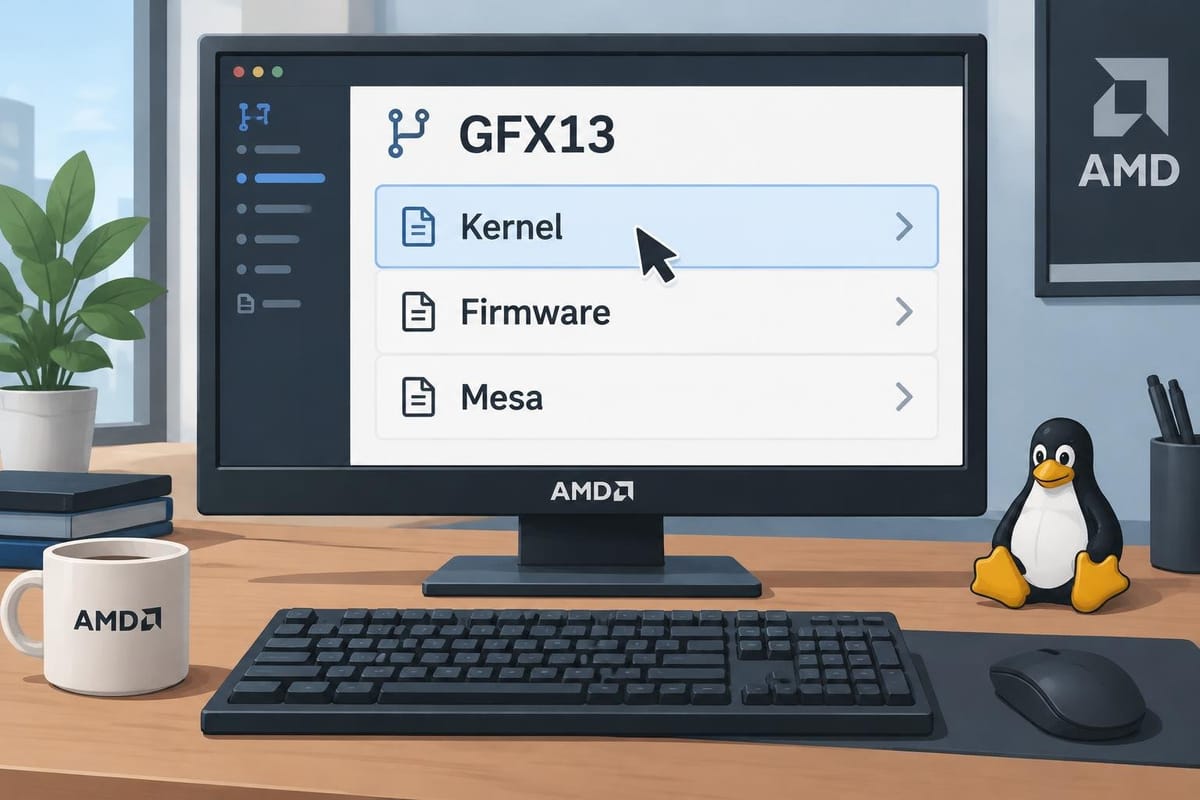
AMDGPU maintainer Alex Deucher submitted eight Linux kernel patches on November 9 to enable GFX13 graphics, adding more than 12,600 lines of driver code, according to Phoronix. The publication associates the graphics IP with AMD’s expected RDNA 5 architecture, though that connection is an interpretation rather than a product announcement.
The submission starts the kernel-driver enablement process; it does not mean distribution users already have working GFX13 support. The patches must be accepted and reach a kernel that a distribution ships, alongside compatible firmware and user-space graphics drivers.
Hardware Busters’ account of the series points to Deucher’s amd-gfx mailing-list submission. It describes a new graphics-engine block, version 13 of the Micro Engine Scheduler for managing queues, and an IMU block for graphics-core startup. The series also adds initial support to AMD’s KFD compute driver and a trap handler that saves and restores compute workload state. Register headers name GC 13.0.1, while another patch adds GFX 13.0.4.
One limitation is already visible: Hardware Busters reports that a patch disables queue reset in the KFD topology because the scheduler does not yet support it on the new IP. Queue reset is a recovery mechanism for individual stalled workloads, so initial enablement should not be confused with a finished driver.
Phoronix describes Linux 7.5 as a likely destination based on timing, not a confirmed merge; Hardware Busters estimates that a 7.5 release could arrive around the first quarter of 2027. The maintainers’ tree status and exact firmware and Mesa availability could not be confirmed, so neither that kernel cycle nor a distribution rollout date is established.
Even after a mainline release, users would need a distribution kernel containing the changes or backports, the required firmware binaries, and Mesa support for applications using its graphics drivers. Rolling distributions and fixed-release distributions can pick up those pieces on different schedules.

Comments ()