Essay urging open licenses for AI code meets legal pushback on HN
An essay urges open licenses for AI-generated code; Hacker News commenters say lack of copyright doesn't oblige anyone to publish source.
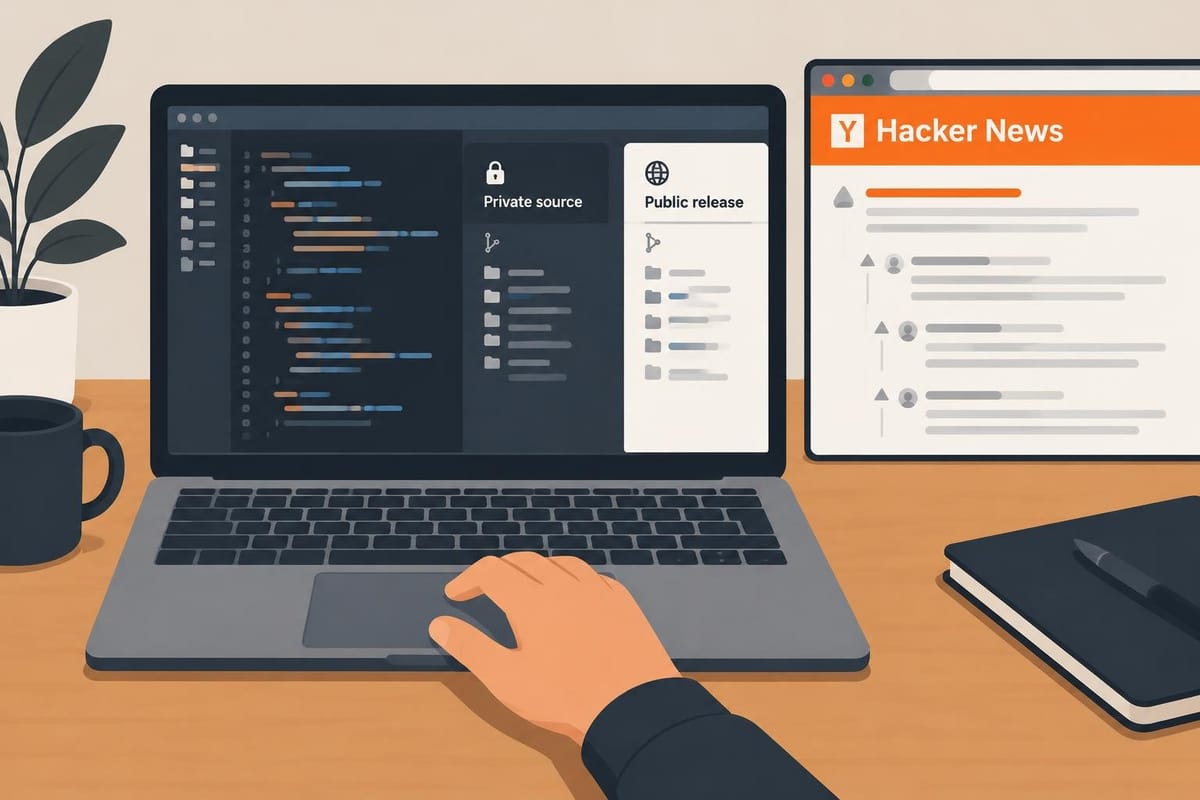
A call for developers to release AI-generated code as open source is a voluntary norm, not an existing legal requirement, and that gap is the main fault line in a Hacker News thread that had about 1,094 points and 595 comments on Nov. 16, 2026. Developer Jakub Jankiewicz argues in a short blog essay that "all code generated by AI should be Open Source." The Hacker News discussion is dated by when it was captured, not by when the essay was published.
The essay asks developers and companies to "explicitly release AI-generated code under Open Source licenses or dedicate it to the public domain" with CC0. It offers two reasons. Models were trained on scraped open-source code and on Stack Overflow content, some under Creative Commons licenses that require attribution, so closing the output "feels like license laundering." And purely AI-generated code is not human-authored, so it should not be copyrightable; he cites the Monkey Selfie dispute and U.S. Copyright Office guidance. He concedes that jurisdictions such as the UK give limited protection to computer-generated works. He proposes no enforcement mechanism or disclosure rule, names no particular open-source license, and offers no way to resolve conflicting obligations, such as third-party code a model reproduces.
Commenter jrmg quoted the Copyright Office's AI report: copyright "does not extend to purely AI-generated material, or material where there is insufficient human control," prompts alone currently do not give sufficient control, and human contributions are judged "case-by-case." That supports the essay's premise about copyrightability, but it concerns who can hold copyright under existing law. It does not say developers must disclose or release code. Human-authored parts, and creative selection or arrangement of outputs, can still be protected.
That is where commenters pushed back. Commenter glitchc argued that copyright licenses depend on underlying copyright, and jonathanstrange likewise distinguished public-domain status from open-source licensing. The point: if output is uncopyrighted, there is nothing to license, and lack of protection does not itself oblige anyone to publish source. Code that stays in a company's private repository can be public-domain in theory and still unavailable to anyone.
The case-by-case standard drew its own objections. Because authorship is judged individually, calibas wrote, you cannot know whether your code is protected "unless someone takes it to court." waterTanuki asked whether adding one comment or renaming one variable makes a generated kernel "mine." PeterStuer raised enforcement: you cannot prove a negative, since not being caught using AI does not show you did not use it.
The captured material contains no policy text from a foundation or named maintainer adopting or answering such a rule. Comment volume reflects interest, not consensus.
Comments ()