Ladybird releases browser alpha for macOS and Linux
Learn how to install the Ladybird alpha, who should try it and why its security and site compatibility remain limited.
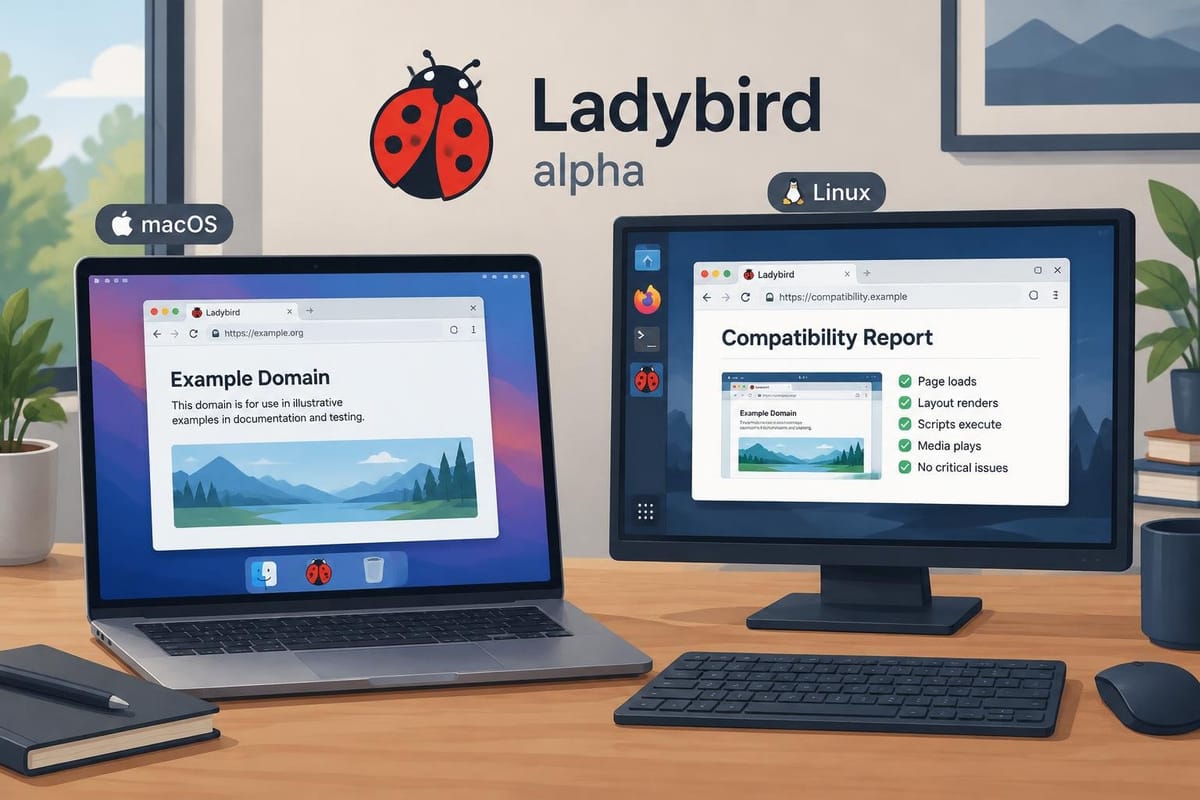
Ladybird released its first downloadable browser alpha for macOS and Linux on Nov. 23, bringing its independently built browser engine to users without requiring them to compile it from source. Developer Andreas Kling says the alpha is a rolling channel that will receive regular updates.
The release is for early adopters willing to encounter bugs and report them, not people looking to replace their everyday browser. Kling says some sites will not work and the browser will sometimes crash. The project makes no security promises for the alpha, so keep sensitive browsing in a mature browser.
Ladybird’s engine is not a fork of Chromium’s Blink, Firefox’s Gecko or Safari’s WebKit, although the browser uses third-party libraries for functions including media and graphics. Windows support is planned for later; mobile platforms are not a current focus, according to the project’s FAQ.
The download page offers a macOS disk image: open it, drag Ladybird into Applications and launch it there. On Linux, the page recommends Flatpak and also lists Ubuntu and Fedora options and a standalone archive. The archive does not update automatically. Developers can also build from source; the project gives this quick-start sequence:
git clone https://github.com/LadybirdBrowser/ladybird.gitcd ladybird./Meta/ladybird.py run
For web developers, Kling invites testing sites in Ladybird and reporting breakage. The browser supports WebDriver for automated testing and the Firefox DevTools protocol. Given the alpha’s expected failures, use those checks to find compatibility problems, not as a release-blocking substitute for testing supported browsers.
Broken-site reports can be submitted inside the browser. Check them before sending: the privacy policy says reports can include screenshots and page content, and accepted reports may be published as GitHub issues. Security researchers should instead report vulnerabilities privately through GitHub, as described in Ladybird’s security policy.
Comments ()