US chip curbs put Southeast Asian data center plans at risk
How US chip licensing rules and a recipient exception affect GPU procurement and cloud access in Southeast Asia.
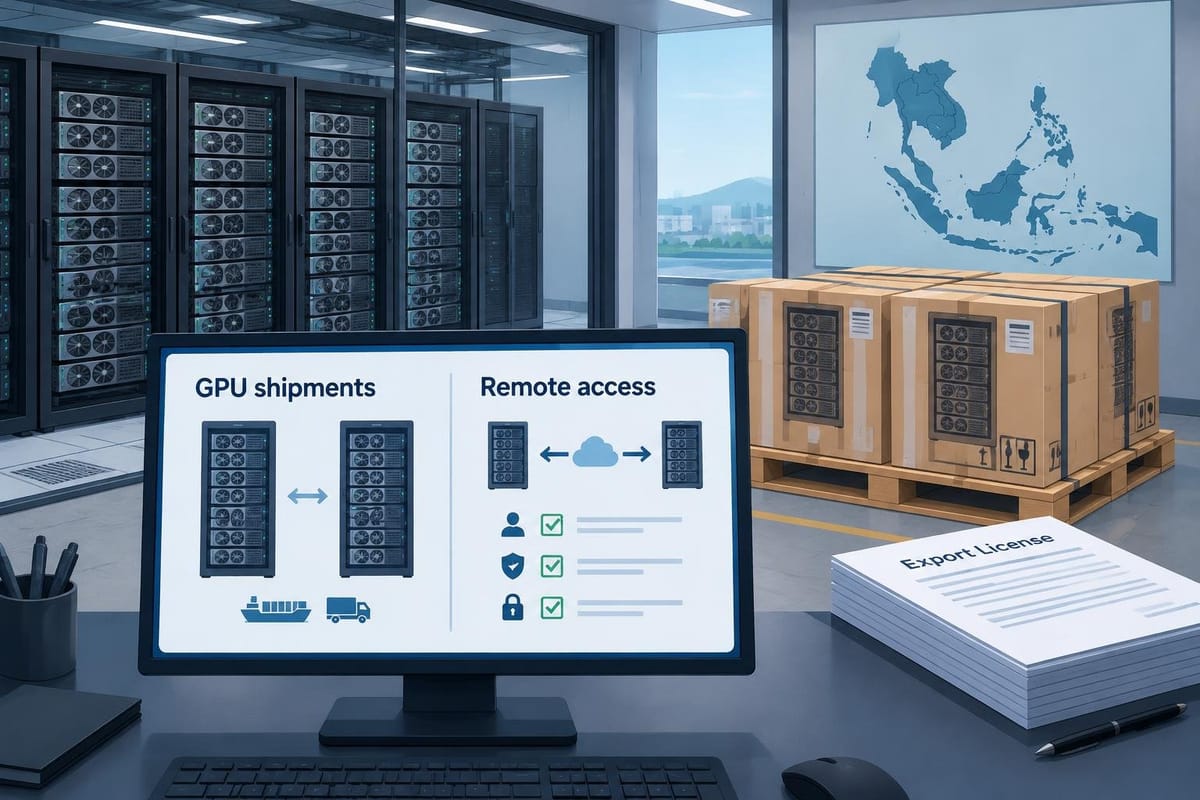
Bloomberg reported on November 22 that US restrictions on advanced chips are squeezing Southeast Asian data centers, as operators face tighter controls on GPU imports and customers’ access to computing power.
For buyers of cloud GPU capacity, the immediate concern is whether a provider can obtain the chips and authorizations needed to deliver its contracted service. Operators dependent on Chinese customers also face potential lost utilization and delayed expansion, Reuters reported, citing an analyst. Those are business risks, not confirmed project cancellations.
The Commerce Department released an interim final rule on November 16 requiring licenses for covered advanced computing items destined for Indonesia, Malaysia, Singapore, Thailand and Brazil, according to law firm Nixon Peabody’s analysis. Shipments to consignees or end users headquartered or ultimately parented in the US are excluded from that five-country requirement if the exporter files the required monthly reports. That exception is distinct from the separate remote-access end-use control.
The firm said the rule was expected to take effect on Federal Register publication on November 19; the effective date remains unconfirmed as of November 23, 2026.
Under the remote-access control, Nixon Peabody says a license is required for covered chips and servers when a shipper knows they are destined for a data center providing more than 12 million aggregate total processing performance to or for companies headquartered or ultimately parented in China, another Country Group D:5 destination, or Macau. Capacity across linked data centers counts toward that threshold. Existing qualifying arrangements have 90 days from the effective date to obtain a license, the firm said.
The rules do not affect every regional provider equally: customer ownership, workload, chip classification and destination matter. Before committing capacity, buyers should ask providers which GPUs are already in place, whether future shipments require and have obtained authorization, and whether the buyer and its ultimate parent are eligible for the intended workload. They should also establish delivery and termination terms if licensing delays capacity.


Comments ()