AAIF Adds Four Projects, but the Real Story Is Coordination
AAIF added four new projects from Anthropic, OpenAI, Hugging Face and Alibaba, signaling standards momentum in the agents ecosystem.
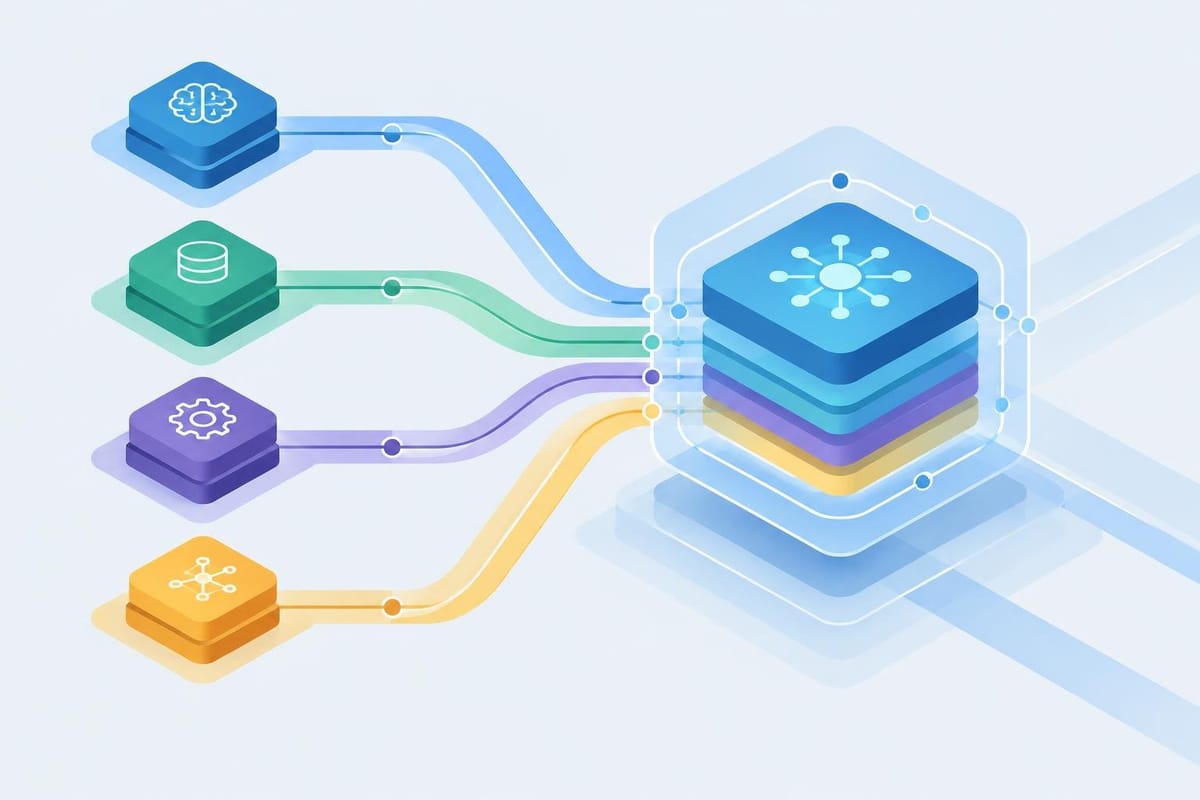
AAIF adds four projects, but the real story is coordination
The Agentic AI Foundation just got bigger — and more consequential. On Oct. 22, the foundation announced four new projects: Agent Skills from Anthropic, Open Responses from OpenAI, OpenEnv from Hugging Face, and OpenSandbox from Alibaba. That lifts AAIF from three projects at launch to 10 in its first year, a tidy signal that the vendor-neutral agents camp is still consolidating around a shared stack rather than a single winner.
AAIF says the additions cover four different layers of the agent pipeline: how agents pick up skills, how apps talk to models across providers, how agents are trained and evaluated, and where they run safely. That framing matters. It is the difference between a demo-friendly agent and something teams can actually try to operationalize.
Anthropic’s Agent Skills standard is the most immediately legible of the four. In Anthropic’s own words, it is a folder-based format with a SKILL.md file plus scripts or reference material that teaches an agent a specific task or domain. Anthropic says more than 70 agent platforms — including ChatGPT, Cursor, GitHub Copilot, and VS Code — have already integrated the standard, and that 1 million skills have been published with nearly 280 million installs since the standard was introduced. Anthropic has now donated the name, logo, GitHub org, and domain to AAIF, while saying engineers from Anthropic, Google, OpenAI and others will maintain it as individuals. Anthropic
The other three projects fill adjacent gaps. AAIF describes Open Responses as an open specification for multi-provider LLM interfaces, including shared request and response schemas, streaming events, and tool-invocation patterns. OpenEnv is aimed at containerized reinforcement-learning environments that can interoperate and scale. OpenSandbox is positioned as a way to constrain agent capabilities using SDKs, tools, protocols, lifecycle hooks, container runtimes, and execution components. AAIF
That is a useful stack map. It is also not the same thing as proof that agent systems are reliable in production. A foundation can standardize interfaces, but it cannot standardize judgment, safety, or the ugly edge cases where agents drift, overreach, or break out of the neat demo path.
That is the right lens for this announcement. AAIF is clearly trying to make the agent ecosystem easier to assemble, test, and govern. The foundation’s own pitch is that vendor-neutral homes reduce fragmentation and let developers build around shared plumbing instead of bespoke glue. The Register made the same basic point more cynically: friendly, funded foundations are where vendor-affiliated AI agent tech goes when the industry wants interoperability without ceding control. The Register
That cynical read is not wrong. The coalition is real, but so is the branding benefit. Big AI vendors get to say they are supporting openness while still shaping the standards layer they are happy to live with. The question is not whether AAIF is meaningful — it is — but whether it becomes the place where agent developers settle disputes about compatibility, security, and execution semantics, or just the place where everyone agrees to look cooperative.
For now, the smarter read is modest. This looks like standards momentum, not standards victory. It is evidence that the agent stack is getting more formalized — skills, model interfaces, test environments, sandboxing — and that the major vendors understand the value of common interfaces. It is not evidence that autonomous agents are ready to roam free in production.
That distinction still matters. Controlled interoperability is not autonomous operation. And in agent land, that gap remains the entire story.
Comments ()