Hamburg Privacy Regulator to Oversee Public-Sector AI Under EU AI Act from January
Hamburg’s privacy authority is reported to oversee public-sector AI from January 2027, showing the EU AI Act’s enforcement layer is taking shape.
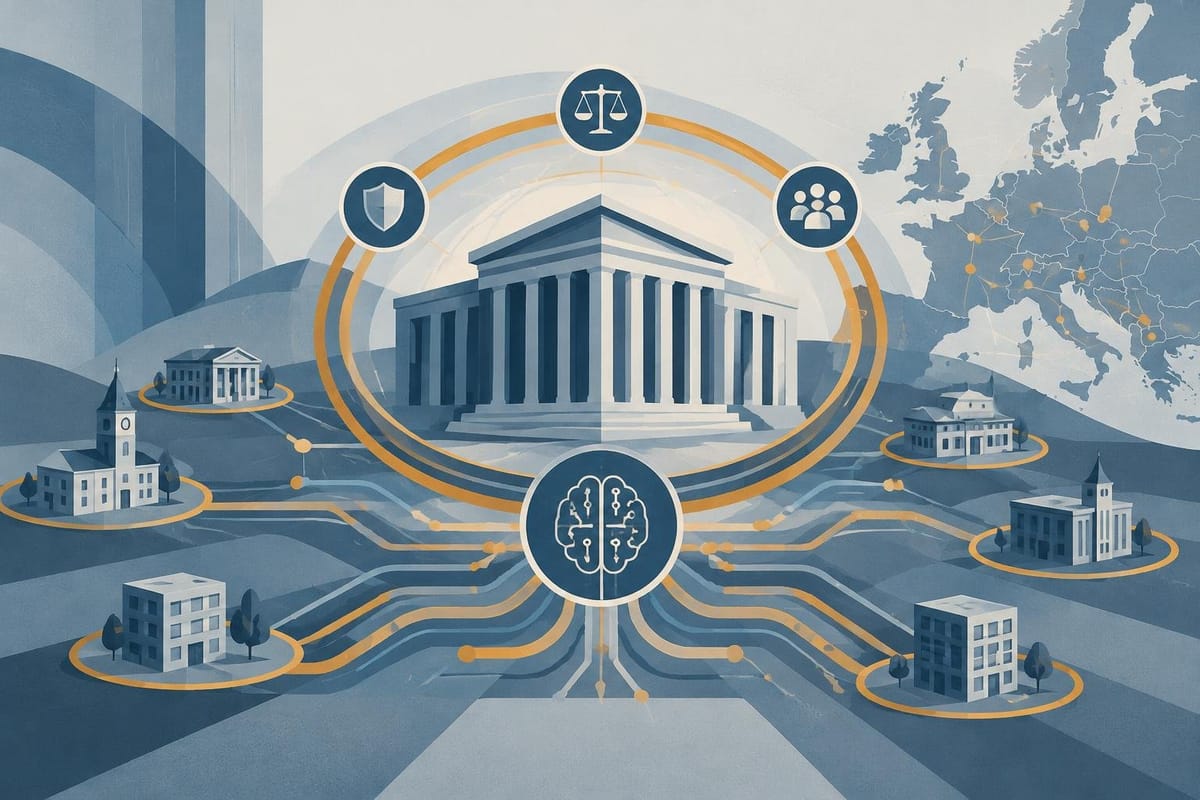
Hamburg’s data protection authority is set to become one of the first named public-sector AI overseers under the EU AI Act, a concrete sign that the law is shifting from statute to enforcement infrastructure.
According to MLex, Hamburg’s DPA will oversee AI systems used by the city-state’s public bodies from Jan. 1, 2027. The reported remit covers public-sector uses including law enforcement, biometric identification, administrative services and education, and the authority is also expected to support innovation through regulatory sandboxes and coordinate with Germany’s Federal Network Agency and EU bodies. MLex
For buyers and vendors selling into government workflows, the early pressure points are clear. High-risk public-sector deployments are the likeliest first targets: systems used to assist admissions, benefits, frontline administration, identity checks, or biometric screening will face closer scrutiny than low-stakes internal automation. The practical burden will be governance-heavy: documentation, logging, human oversight, and a cleaner account of who is responsible when a system affects public decisions.
That matters because the EU AI Act is not just creating rules; it is also creating enforcement capacity. A named local authority, with an explicit public-sector mandate, suggests member states are beginning to map the law onto existing privacy and regulatory institutions rather than waiting for a separate AI bureaucracy to emerge from scratch.
The strongest counterargument is that this is still an implementation signal, not proof of a full enforcement regime. MLex’s report gives the broad outline, but the public record cited here does not yet spell out the full scope of powers, resourcing, escalation channels or how Hamburg’s role will interact with other German and EU supervisors. That makes the appointment important, but still partial: a first step in the build-out, not the finished architecture.
For now, the key takeaway for public-sector AI teams is simple: compliance planning should assume that oversight is becoming local, operational and specific to use case, not just a Brussels-level abstraction.



Comments ()