Gauge CLI Asks Whether Agent UX Can Be Engineered
What Gauge CLI claims about optimizing docs, SDKs, CLIs, and agent-facing surfaces — and why launch-page language is not proof of production value.
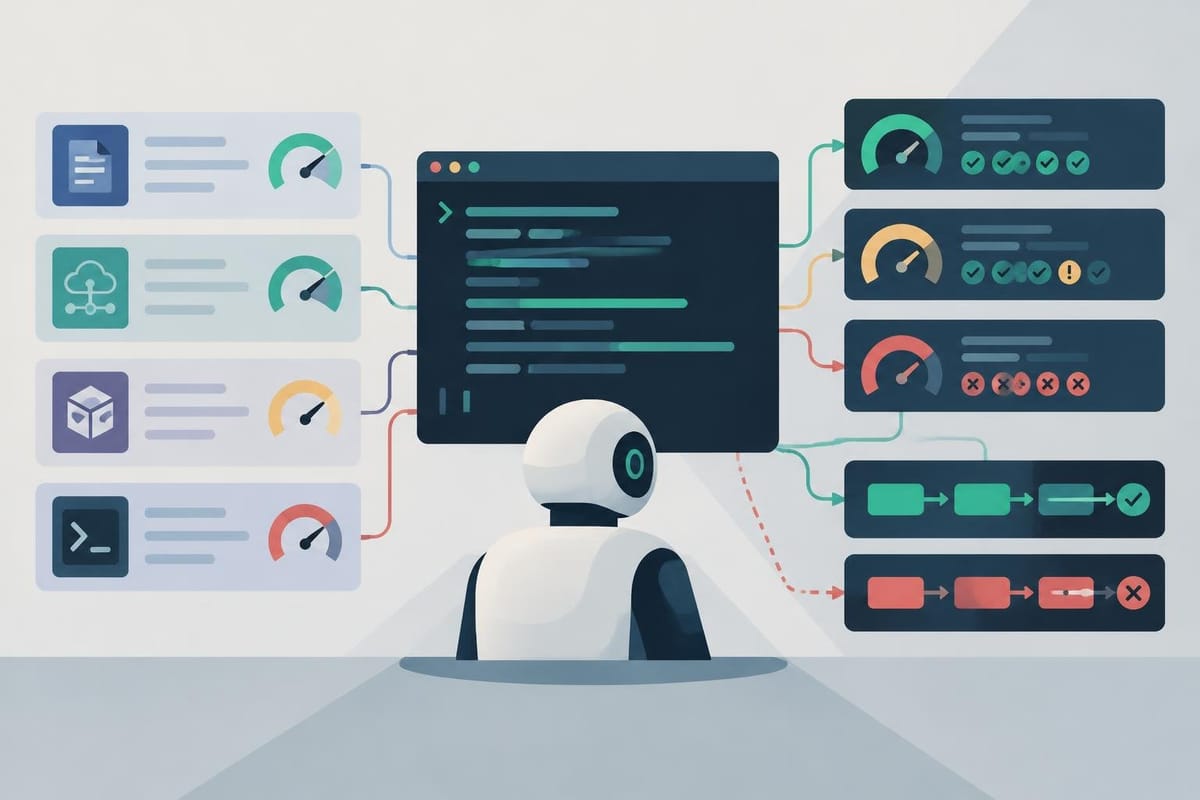
Gauge CLI asks whether agent UX can actually be engineered
The new open-source Gauge CLI wants to do for agent-facing developer surfaces what linting and test harnesses did for code quality: make the messy parts measurable enough to improve. The project says it is built to “hillclimb” skills, CLI, SDK, MCP, API, or docs so they are more useful to agents, and that is the right question to ask. The harder one is whether this is a real engineering discipline or just another layer of agent-washed demo language.
The repository frames Gauge CLI as “the open-source Gauge CLI” and explicitly says it is for optimizing what agents consume across skills, CLI, SDK, MCP, API, or docs. That positioning matters because most agent products still fail in boring ways: unclear commands, brittle docs, hidden assumptions, and interfaces that look fine to humans but break under machine consumption. Gauge’s pitch is basically that those surfaces can be tuned for agent use instead of merely human use. The repo itself is here: https://github.com/gauge-sh/gauge-cli.
That is a useful idea. It is not proof.
A launch page can tell you a tool exists; it cannot tell you whether it works in production. The phrase “agents want” is doing a lot of work here. If the project is serious, the test is not whether it can make a clean demo prettier. The test is whether it helps teams detect failures that show up when a model is navigating real documentation, real command output, real authentication steps, and real edge cases.
Those failure modes are predictable:
- commands that are technically correct but operationally ambiguous
- docs that omit prerequisites agents cannot infer
- SDK examples that assume a human will fill in the blanks
- CLIs that require too much context switching or invisible state
- MCP/API surfaces that look structured but still fail under chaining, retries, or partial execution
That is where “agent experience” becomes more than branding. If Gauge can turn those problems into repeatable checks, comparisons, or scoring, it could be a legitimate part of the emerging agent-tooling stack. If it cannot, it is just repackaging the old dream that every interface can be optimized once you slap “AI” on the label.
The repo text hints at a workflow for evaluating surfaces, not just describing them. But the launch materials available here do not yet establish adoption, benchmark quality, or whether the project measures anything beyond controlled examples. That distinction matters. A controlled demo can show that a polished path exists. Reliable autonomous operation means the interface survives the ugly stuff: malformed inputs, missing permissions, ambiguous docs, broken examples, and state that drifts between runs.
That is the bar.
For readers building agent products, the useful takeaway is narrower and more practical: Gauge CLI is a sign that the market is moving from “can the model use tools?” to “how do we make tools easier for models to use?” That is a real shift, and it is overdue. But the category is still young enough that claims about measurability should be treated as a hypothesis, not a conclusion.
The safest reading is this: Gauge CLI is worth watching because it points at a real bottleneck in agent development. The unsafest reading is that a new repo automatically solves it. It doesn’t. The hard part is still the same: proving that an interface improvement changes outcomes outside a demo.
Until there is evidence of that, call it promising instrumentation — not a solved problem.
Comments ()