DeepSeek's V4.1-Flash-1017 Reached Users Through a Live API Push — With Thin Official Documentation
DeepSeek's V4.1-Flash-1017 snapshot reached users through a live API update first caught by trackers, with no official announcement identified in available reporting.
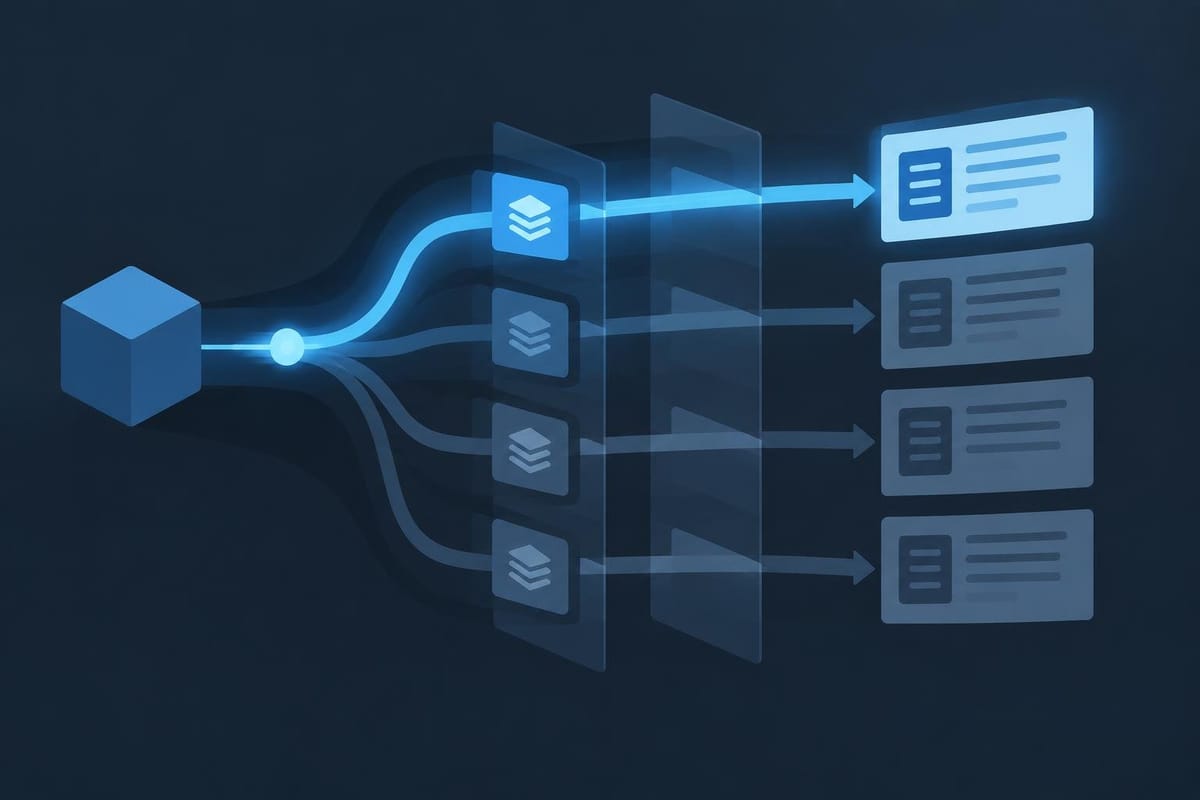
On the night of October 17, 2026, a bot account called AI Tracker Bot posted on X that it had caught a new model identifier — deepseek-v4.1-flash-1017 — appearing briefly in DeepSeek's own API model list at 9:59 PM ET, only for the API to reject the name minutes later. Separate trackers, including posters credited as loktar00 and quimedesu, caught the same signal. The model then shipped for real under that exact name, according to two Startup Fortune reports published October 17. No official DeepSeek announcement was identified in available reporting at the time those observations were made.
How the Release Surfaced
The sequence, as described by Startup Fortune's Ron Patel, went: API flicker on October 17, tracker confirmation over the following days, and then secondary confirmation through Vercel's AI Gateway changelog — which, according to that reporting, listed DeepSeek V4.1 Flash 1017 as the October 17 snapshot of the V4.1 Flash line, with weights also appearing on Hugging Face under an MIT license. Those surface appearances were reported by Startup Fortune, not announced by DeepSeek directly.
The 1017 suffix follows a naming convention DeepSeek has used before. Earlier snapshots include V4-Flash-0731 and V4-Pro-0813, where the trailing digits encode a date. That places the internal build or initial deployment on October 17, consistent with the tracker reports.
What the Reporting Says About Capabilities
According to Startup Fortune's Julian Lim, the 1017 snapshot builds on the V4.1-Flash base, which Startup Fortune reports posted a Codeforces rating of 3471 and a 74.2% pass rate on the Deep-SWE v1.1 coding benchmark — ahead of Opus-5 (74.0%) and GPT-5.6 Sol (73.0%) in that comparison. Those figures appear in Startup Fortune's secondary coverage, not in a primary DeepSeek model card or technical paper; treat them accordingly.
The same reporting describes the 1017 snapshot as bringing gains in coding, agentic multi-step tasks, and image understanding, and notes that it completes tasks faster and with shorter outputs than the prior snapshot. For teams running agents that bill by the token, fewer output tokens per loop is a cost-relevant change, not just a benchmark footnote.
DeepSeek also described the model as "optimized for DeepSeek Harness, Tencent CodeBuddy, WorkBuddy, and more," per Startup Fortune, and told users to upgrade to DeepSeek Harness v0.2.1-rc.1 or later. DeepSeek Harness — command-line name dsh — is the company's own MIT-licensed agent framework, released August 13. A model tuned for its own harness, announced alongside a harness version bump, is a deliberate stack integration move, not an incidental note.
Separately, a Tom's Hardware headline from October 23 described what it called DeepSeek's "latest AI model" as requiring only one-quarter of the HBM and one-eighth of the SSD storage of a prior release, while still battling hallucinations in agentic workloads. That article's headline does not specify whether it is describing V4.1-Flash-1017 or a different recent DeepSeek release, so those figures should not be read as confirmed specifications of this exact snapshot. The hallucination-in-agentic-workloads note is worth flagging independently, regardless of which specific release it describes: teams considering any recent DeepSeek model for multi-step agentic pipelines should run targeted regression tests before directing production traffic.
Pricing
According to Startup Fortune, pricing through Vercel's AI Gateway sits at $0.30 per million input tokens and $1.20 per million output tokens for the V4.1 Flash line. Whether those rates apply unchanged to the 1017 snapshot was not established in available reporting. Check platform-specific terms directly before assuming continuity.
What This Means for Teams Tracking DeepSeek
DeepSeek's pattern here — a live API deployment observable through trackers before any formal changelog — creates a practical version-management problem. Teams that do not pin model versions explicitly may find a new snapshot in production before they have tested it.
Three steps worth taking now:
- Pin the full version string in API calls (
deepseek-v4.1-flash-1017) rather than a floating alias, so you control when upgrades happen. - Watch Vercel's AI Gateway changelog and the Hugging Face model hub — per available reporting, those surfaces surface new checkpoints before official DeepSeek documentation does.
- Run agentic regression tests before routing production traffic to any new snapshot, especially given independently reported concerns about hallucination rates in multi-step workflows.
We did not locate a DeepSeek primary-source announcement — model card, technical paper, or official changelog — in our reporting. Readers should check DeepSeek's API documentation and the Hugging Face model hub for current primary-source information before making deployment decisions.
Comments ()