Two Apple Developer Notices With Near-Term Action Items: Multiseat Subscriptions and Revised App Review Guidelines
Apple's October 2026 developer notices cover multiseat subscription defaults and revised App Review Guidelines — here's what teams need to act on now.
Two Apple Developer Notices With Near-Term Action Items: Multiseat Subscriptions and Revised App Review Guidelines
Apple issued two consequential developer notices in the past two weeks, both carrying concrete action items for teams shipping on Apple platforms. Neither is alarmist, but both reward early attention — particularly for teams running submission pipelines against a holiday-season schedule.
What Apple's Developer News Page Actually Says
The Apple Developer News page, captured October 24, 2026, shows two active items.
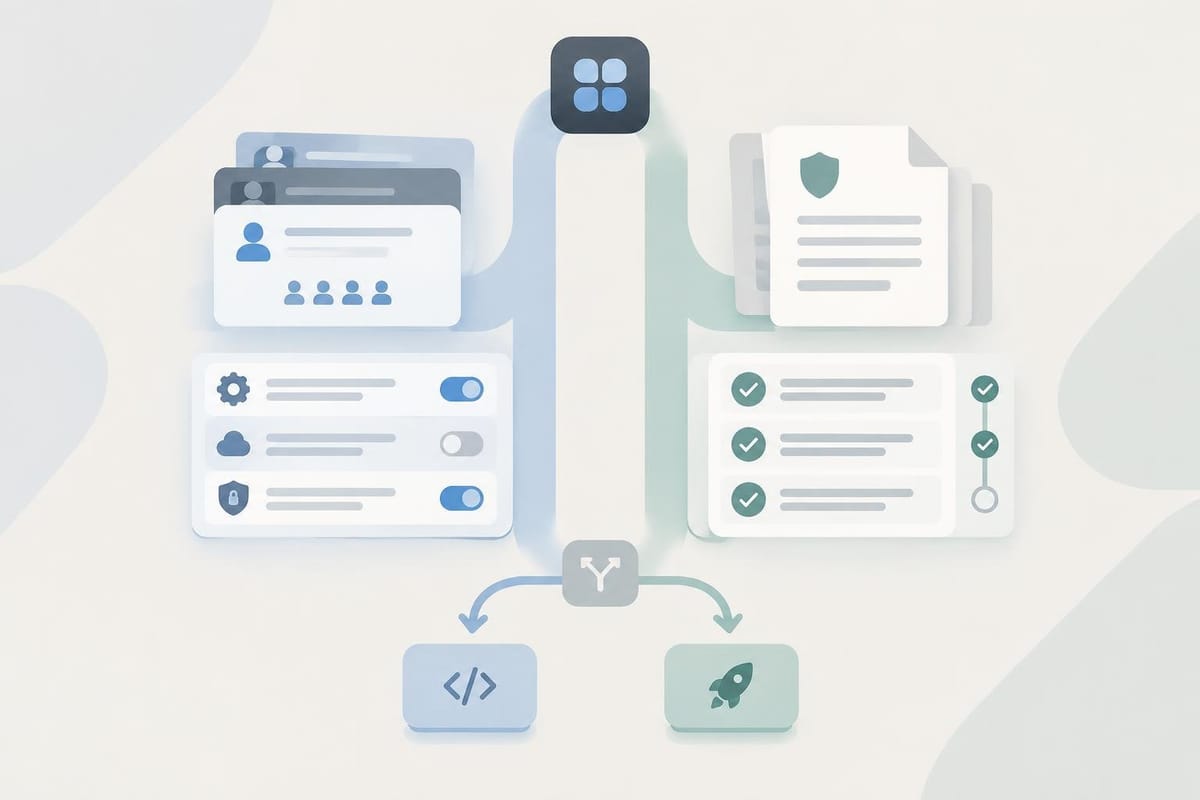
October 22: Apple opened multiseat purchasing for auto-renewable subscriptions. Organizations and educational institutions using Apple Business Manager or Apple School Manager can now acquire subscription seats in volume through a single In-App Purchase. Seat assignment and removal flows through existing mobile device management tooling. Multiseat purchasing is enabled by default in App Store Connect unless you have previously adjusted the setting — which, depending on your configuration, may make your subscription available for purchase through Apple Business, Apple School Manager, and the App Store. Developers who have not audited their subscription configuration in App Store Connect should do so now. Group purchasing — allowing consumers to buy multiple seats and invite others — arrives in Sandbox in November and more broadly "this winter."
October 16: Apple published revised App Review Guidelines. The changes are substantive. Section 1.2 clarifies which app content and types are subject to the guideline and adds language about Developer Code of Conduct violations for failing to implement appropriate safeguards or remediate violations after notice — with content moderation requirements now explicitly covering nonconsensual intimate imagery, including AI-generated imagery. Section 2.3.14 is a new guideline covering creative assets. Section 2.5.19 is also new, pulling hidden, dormant, or undocumented feature language out of the older 2.3.1 bucket and giving it its own rule. Section 3.1.1(a) removes the Music Streaming Services Entitlements bullet (now folded into StoreKit External Purchase Link Entitlements) and clarifies that links may point to a permitted destination. Section 5 is sharpened on apps that facilitate human trafficking or child exploitation — removal and block from alternative distribution are the stated consequences.
Apple also published a companion notice on October 16 explicitly addressing nonconsensual intimate imagery and bait-and-switch apps, signaling that the 2.5.19 and 1.2 updates are part of a coordinated enforcement posture rather than routine housekeeping.
The Xcode 26.5 Beta Signal
This article was commissioned in response to a signal that Apple's developer communications were prompting teams to validate against Xcode 26.5 beta. That framing is not confirmed in the captured Apple Developer News page text as of October 24. The page does not contain a specific Xcode 26.5 beta notice or an explicit call to rebuild and test against that toolchain.
This matters operationally. Apple routinely publishes beta readiness and compatibility prompts in dedicated Release Notes entries, in the Downloads section, and through the Developer Forums rather than in the main news feed. If a formal Xcode 26.5 beta validation prompt exists, it has not been captured in the available evidence. Teams should verify directly at developer.apple.com/news/releases/ and in the Xcode Release Notes before acting on secondhand guidance.
What the fetched evidence does confirm is that Apple's App Store policy environment is actively moving. Given that the App Review Guidelines updated on October 16 and multiseat purchasing opened on October 22, any team in the middle of a submission cycle needs to be current on both.
Practical Checklist for October
App Store Connect configuration: Log into App Store Connect and verify your subscription's multiseat availability settings. The default-on behavior means the setting is enabled unless you have previously adjusted it, which may surface your auto-renewable subscription to enterprise buyers through Apple Business or Apple School Manager depending on your configuration. If that distribution channel is not part of your current support or billing model, audit and adjust the setting now rather than after an unexpected enterprise purchase arrives.
App Review Guidelines review: The 2.5.19 change on hidden or undocumented features is the highest-risk update for most development teams. If your app ships with feature flags, server-side killswitches, or phased rollout mechanics that are not disclosed in your App Store metadata or Review Information notes, revisit your documentation before your next submission. The Section 1.2 safeguard language raises the bar on content-moderation due diligence for apps with user-generated content, and the companion nonconsensual intimate imagery notice makes clear that Apple intends to enforce proactively.
Creative assets (2.3.14): The guideline is new and the full text is in the App Review Guidelines. Teams using AI-generated imagery, licensed stock, or third-party creative in screenshots or promotional material should read the new section before their next metadata update.
Xcode toolchain validation: Apple's standard cadence brings a dot release to Xcode before major OS shipping windows. Teams targeting iOS 26, iPadOS 26, macOS Tahoe, or watchOS 13 in any near-term submission should monitor the Xcode Downloads and Release Notes pages. If a beta is available, the prudent move is to run a parallel build-and-archive against it even if your production pipeline stays on the stable release, to surface any SDK or linker behavior changes before they become a submission blocker. This recommendation is based on Apple's standard pre-release cadence, not a confirmed beta notice.
What to Watch
Group purchasing lands in Sandbox in November. Developers building subscription products that could have legitimate group or family use cases should review the App Store Connect documentation on multiseat subscriptions before the Sandbox window opens, as testing the flow before general availability will require configuration changes.
The App Review Guidelines revisions are in effect now. Apple's October 16 notice did not specify a grace period; revised rules apply to submissions from that date forward.
Source: Apple Developer News, captured October 24, 2026. The Xcode 26.5 beta call-to-action that prompted this assignment was not confirmed in the captured page text; teams should verify directly at developer.apple.com/news/releases/ before acting on that specific guidance.
Comments ()