NetBSD 11.1 is mostly a maintenance release — but the backports matter
What changed in NetBSD 11.1, which fixes matter, and who should upgrade now rather than wait.
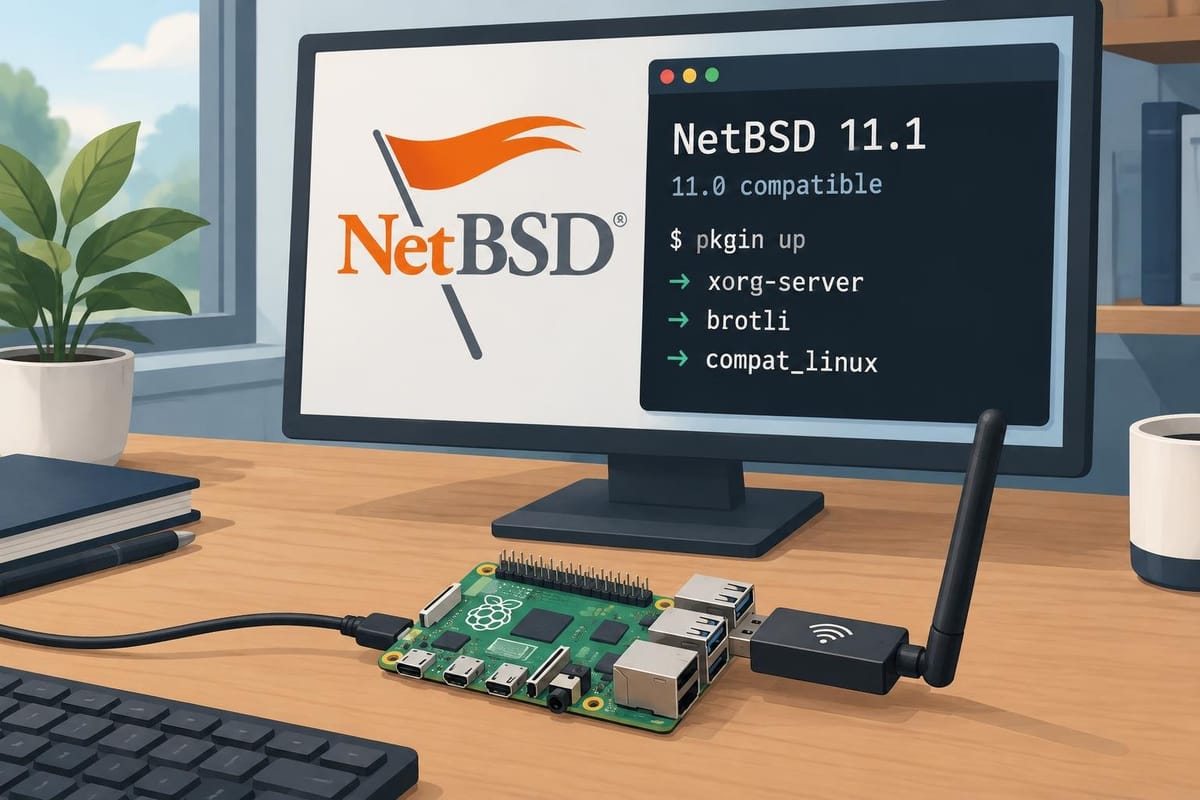
NetBSD 11.1 arrived on Nov. 3 as a point release, and the headline is not a flashy new feature set so much as a deliberate round of backported fixes that the project says were important enough to ship without breaking 11.0 compatibility.
The official release notes describe 11.1 as the first point release of the NetBSD 11 stable branch, with updates pulled in from current development for security and stability rather than a big version-jump rewrite. According to the release announcement, the fixes touch the X.Org Server, Brotli, Mozilla root certificates, compat_linux, and other components. The same notes also call out non-security improvements: better USB device stability on Raspberry Pi hardware, fixes for hot-plugging bugs in various Wi‑Fi drivers, and CPU-specific fixes. NetBSD release announcement
That mix tells you what kind of update this is. NetBSD 11.1 is not trying to change the platform’s shape; it is trying to reduce the risk of staying on 11.0. For admins who run NetBSD on exposed systems, the most obvious reason to move is the security backport set. The project specifically names the X.Org Server, Brotli, Mozilla root certificates, and compat_linux among the affected areas. Even without a full public line-by-line vulnerability table in the release blurb, those are not decorative patches: they include browser-adjacent trust material, compression code, and Linux-compatibility machinery that can affect how mixed workloads behave. NetBSD release announcement
The practical, non-security case for upgrading is narrower but easier to identify. The release notes and a contemporaneous summary from Phoronix both highlight improved USB stability on Raspberry Pi systems, hot-plug fixes for Wi‑Fi drivers, and CPU-specific fixes. For embedded deployments and hobbyist boards, that matters more than it would on a desktop: flaky USB and wireless hot-plug behavior can mean failed peripherals, dropped connections, or boot-time workarounds that no longer stay workarounds. Phoronix also notes that the changes were backported precisely because they were deemed important enough to include without breaking NetBSD 11.0 compatibility. Phoronix
The compatibility promise is the key tradeoff. NetBSD 11.1 is framed as an update you can take without expecting the sort of churn that accompanies a major release. That makes the upgrade decision less about new features and more about operational hygiene: if you are already on 11.0 and care about the specific subsystems named in the release notes, 11.1 is the safer branch to sit on. If your system is stable, not exposed, and not affected by the listed fixes, the release does not appear to force a migration for feature reasons alone. NetBSD release announcement
For BSD practitioners, the bigger signal is that NetBSD continues to use the stable branch the way a stable branch should be used: selective backports, not feature inflation. That matters because the project is also still carrying compatibility layers and hardware support that make NetBSD attractive in long-lived or unusual environments. In this release, the emphasis is on keeping those environments usable: safer root certificates, repaired compatibility code, and better behavior on small-board hardware that often sits at the edge of what a mainstream distro prioritizes. NetBSD release announcement
If you are deciding whether to upgrade now, the answer is clearest for three groups. Embedded and Raspberry Pi users get the strongest hardware reason, especially if they have seen USB or wireless flakiness. Administrators who track security backports should move sooner rather than later because 11.1 packages multiple fixes that the project considered important enough to publish on the stable branch. Retrocomputing and general hobby users who are not affected by those areas have less urgency, but they still get a cleaner base without sacrificing 11.0 compatibility. Phoronix | NetBSD release announcement
The bottom line: NetBSD 11.1 is not the release to chase for novelty. It is the release to take if you care about staying current on security backports and fixing real-world annoyances in USB, Wi‑Fi, and CPU handling without giving up the stability contract that a point release is supposed to provide.
Comments ()