China’s tungsten curbs are squeezing a tiny chipmaking tool — the drill bits that make PCB and substrate micro-holes
China’s metal export controls are disrupting tungsten-carbide micro drill bits used in PCBs and chip substrates, a quiet chipmaking chokepoint.
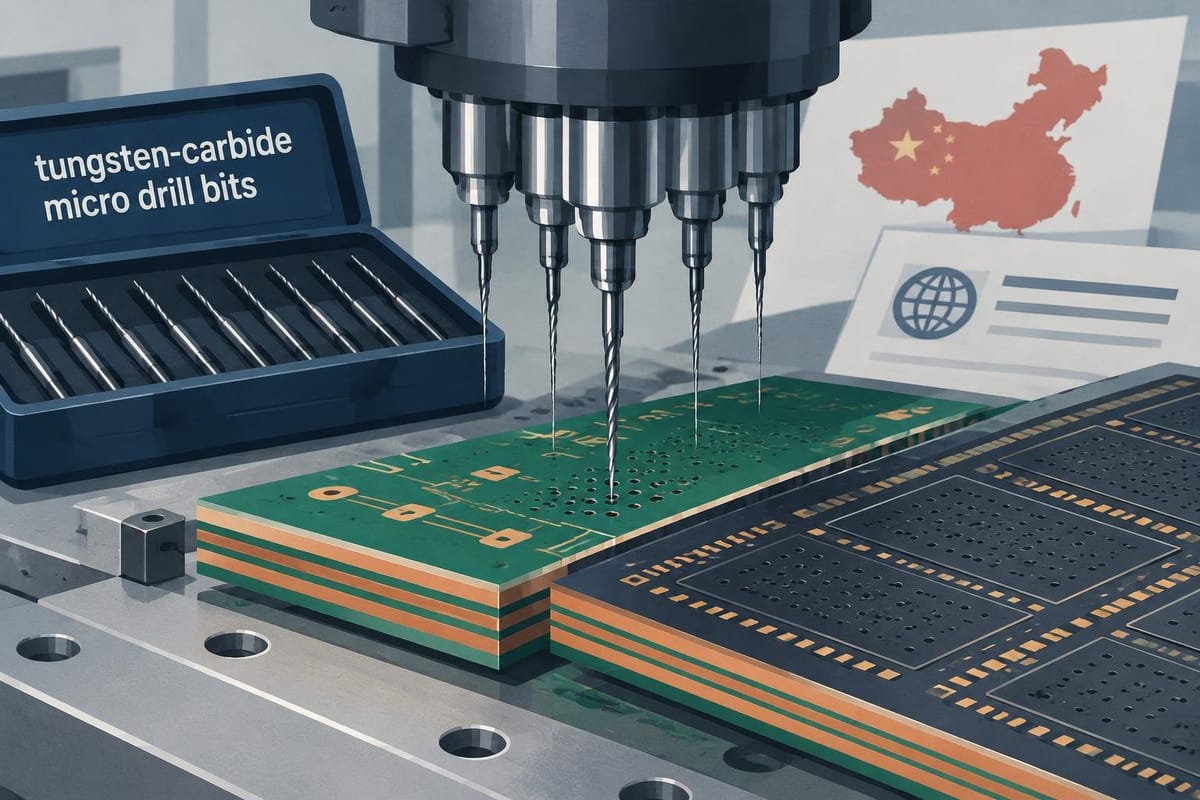
China’s export controls on critical metals are not biting first at a wafer fab or an assembly line. The clearest exposed step is earlier and quieter: the tungsten-carbide micro drill bits used to bore the micro-holes in printed circuit boards and chip substrates, according to Nikkei Asia’s Nov. 5 report.
That matters because those holes are the connections that let layered boards and advanced substrates carry signals between circuits. Nikkei reported that China’s export controls have disrupted supplies of micro drill bits, calling them little-known but critical components in the AI chip supply chain, and it identified tungsten carbide as the material used in those bits. A Biztoc repost of the same Nikkei story also summarized the piece as saying export controls on the critical metal had sent the price of the key tool surging, but the underlying Nikkei text available here supports the supply disruption more directly than the downstream price claim. Nikkei Asia Biztoc
What exactly is exposed
The vulnerable manufacturing step is drilling micro-holes in multilayer PCBs and semiconductor substrates. Nikkei’s wording is specific: “tungsten carbide bits” drill micro-holes in printed circuit boards and chip substrates. Those are not finished chips, GPUs or servers; they are tools and consumables in the board and substrate-making process. Nikkei Asia
In practical terms, the exposure sits in the equipment chain that board and substrate makers depend on. If tungsten-carbide drill-bit supply tightens, manufacturers may face higher tooling costs or shortages of a consumable they need to keep drilling dense, high-layer-count boards and advanced substrates. That is a reasonable inference from the Nikkei report’s supply disruption, but the available reporting here does not establish factory shutdowns, quantified lead-time changes or named customer losses.
Why this bottleneck matters more than a generic “AI supply chain” headline
The phrase “AI supply chain” can make this sound like a broad chip shortage. The reporting supports something narrower and more mechanical. Micro drill bits are a consumable deep in the PCB and substrate process, and advanced substrates matter because they are used in the packaging of high-end chips and data-center hardware. Nikkei linked the drill-bit disruption to both PCBs and chip substrates, which means the pressure is not limited to ordinary consumer boards. Nikkei Asia
Still, the evidence available here does not show a direct hit to AI server shipments or a verified production cut at a named downstream manufacturer. The better-supported conclusion is narrower: a constrained consumables market has opened up in a step that advanced board and substrate makers cannot easily replace.
What the sources do and do not show
The Nikkei report establishes three things clearly:
- China’s export controls on critical metals disrupted supplies of micro drill bits.
- The bits are made mainly from tungsten carbide.
- The bits are used to drill micro-holes in PCBs and chip substrates. Nikkei Asia
What it does not establish, in the material reviewed here, is a full downstream accounting of who has already been forced to stop production, which customers are short of supply, or how much lead times have moved. The Biztoc summary and search snippets suggest price pressure and wider board-market tension, but those are secondary signals rather than direct confirmation of a broader production crisis. Biztoc
That distinction matters. The real story is not that every part of AI hardware is suddenly at risk. It is that a specialized tool sits one step earlier in the chain than most readers expect, and that is where China’s tungsten curbs are now being felt.
The broader implication
If the drill-bit supply remains tight, the pressure is likely to show up first in the most demanding boards and substrates: the dense, high-layer-count components used in advanced electronics and AI infrastructure. That does not prove a finished-product shortage. It does mean a narrow but important manufacturing input has become another point where geopolitics can ripple into hardware production.
For readers tracking AI capacity, the useful takeaway is that the bottleneck is not a chip fab machine or a server rack. It is a consumable at the board-and-substrate stage — tungsten-carbide micro drill bits — and that makes the constraint harder to spot until it starts affecting the producers who rely on them. Nikkei Asia

Comments ()