FT links Nvidia chip supply network to alleged criminal enterprise
FT reporting on an Nvidia chip supply network highlights why buyers should verify reseller provenance and export compliance.
The Financial Times has linked a network supplying Nvidia AI chips to an alleged Cambodian criminal enterprise, according to its investigation republished by the Australian Financial Review on November 22. The report connects former Megaspeed executive Alice Huang to the network and says US authorities are investigating whether the Singapore-based Nvidia customer participated in the underground chip trade.
For infrastructure buyers, the practical issue is provenance: a reseller’s location or apparent relationship with a major supplier does not by itself establish where a GPU originated or whether a transaction complies with export restrictions. The reporting does not mean every intermediary or buyer broke the rules, and it does not establish a wider chip shortage.
The FT’s reported corporate and personal connections are distinct from evidence about individual shipments. Earlier, Mint reported that The Information estimated $4.6 billion worth of AI chips had been imported through Megaspeed from 2023 to 2025 and another $2 billion routed through Malaysia-based Speedmatrix. Those estimates are attributed reporting, not a finding that every shipment was unlawful.
The FT republication says some US officials suspect Huang was a Chinese spy; Beijing dismissed the allegation as a “smear.” The available reporting does not establish the legal status of individual chip transactions.
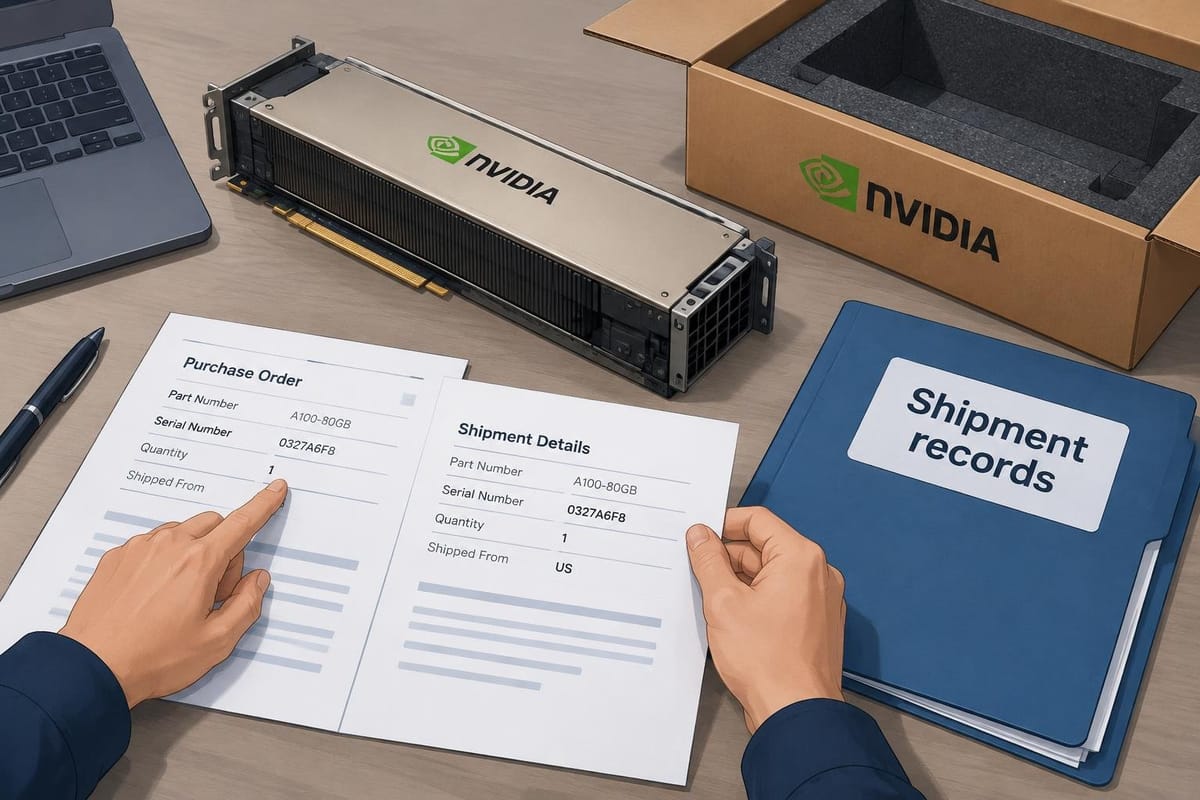
Buyers sourcing high-end accelerators through resellers should request the supplier’s purchase and shipment records, identify the actual seller and intended end user, and check whether the GPU model, destination and parties require export authorization. Gaps in that chain warrant review before an order is completed.



Comments ()