Google Cloud’s London Outage Exposes How Regional Blast Radius Travels
What the London outage reveals about regional blast radius, failover assumptions, control-plane coupling, and status-page limits.
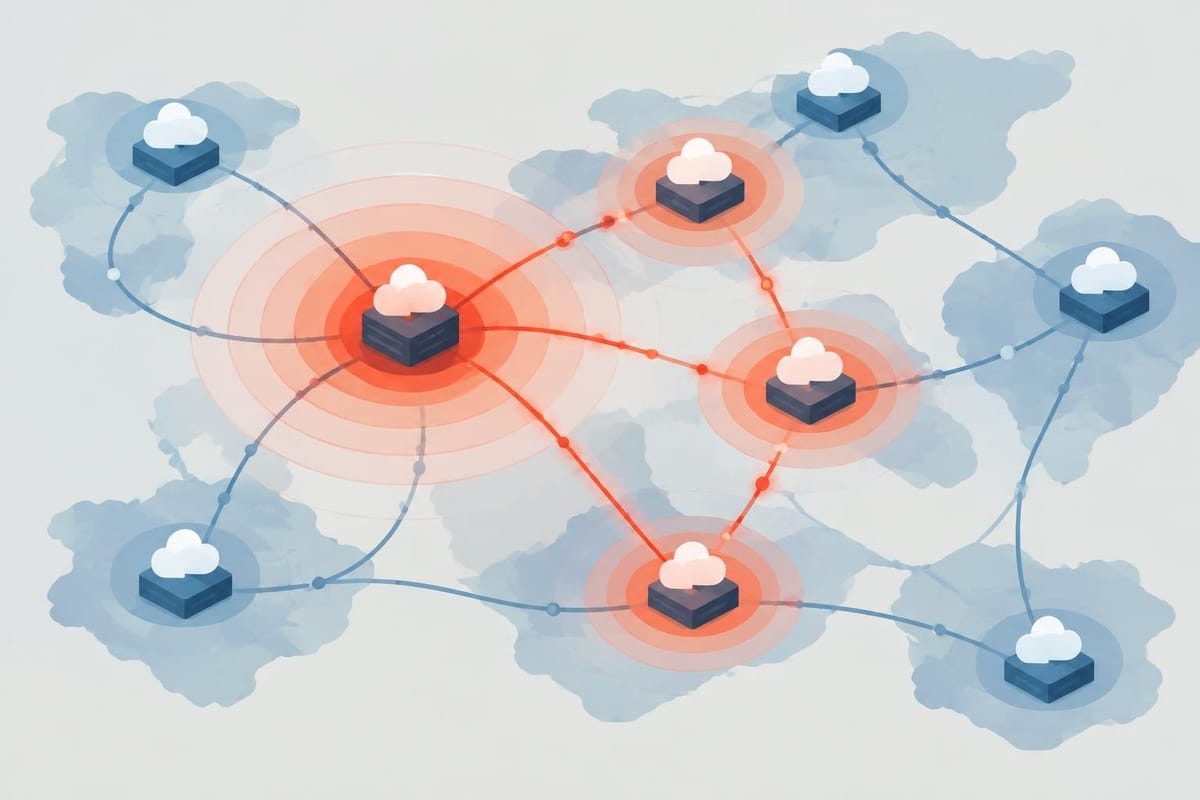
Google Cloud’s London outage is less interesting as a status-page blip than as a reminder that regional incidents can cascade far beyond the first service to fail. For teams running critical workloads, the bigger question is not whether a provider posts an incident banner, but how much of the application stack is concentrated in one region, one control plane, or one dependency chain.
What makes this case worth watching is the gap between operational impact and public visibility. Provider status pages often compress a messy sequence of failures into a short timeline, while customers experience the outage through failed deploys, stalled requests, broken auth flows, or delayed failovers. In this assignment, the available material points to a London-region disruption, but Google has not surfaced a full public postmortem in the workspace sources. That leaves the key engineering question intact: what exactly failed, what else it affected, and how quickly customers could route around it.
For SRE teams, the incident is a checklist item in three areas:
- Region dependency — If primary and secondary services both sit behind the same regional dependency, “multi-region” can be a paper promise rather than a real recovery path.
- Failover assumptions — Automatic failover only helps if it is tested under realistic conditions, including DNS propagation, data consistency, and authentication state.
- Control-plane coupling — Even when application data is distributed, the management plane, CI/CD path, identity provider, or networking layer may still be region-bound.
The practical lesson is not to overread one outage into a universal failure mode. It is to treat every cloud incident as evidence that dependency maps age faster than architecture diagrams. Teams should verify which services are truly regional, which are globally replicated, and which are only “reachable from another region” in theory.
The other unresolved issue is communications. During provider incidents, engineers often learn more from customer reports, Slack threads, and internal errors than from the first public update. That makes incident response a documentation problem as much as a resilience problem: if users cannot tell whether a degraded service is isolated, partial, or broad, their own mitigation playbooks slow down.
Until Google publishes a detailed postmortem, the safest reading is narrow: the London outage is a reminder that cloud resilience is measured in blast radius, not branding. The right response is to audit regional concentration, test failover end to end, and assume that a clean status page can still hide a very dirty failure mode.


Comments ()