Outlook’s DMARC enforcement looks broader than Microsoft’s 5,000-message rule
Microsoft’s Outlook consumer inboxes are reportedly rejecting some low-volume mail without DMARC, creating a broader deliverability problem.
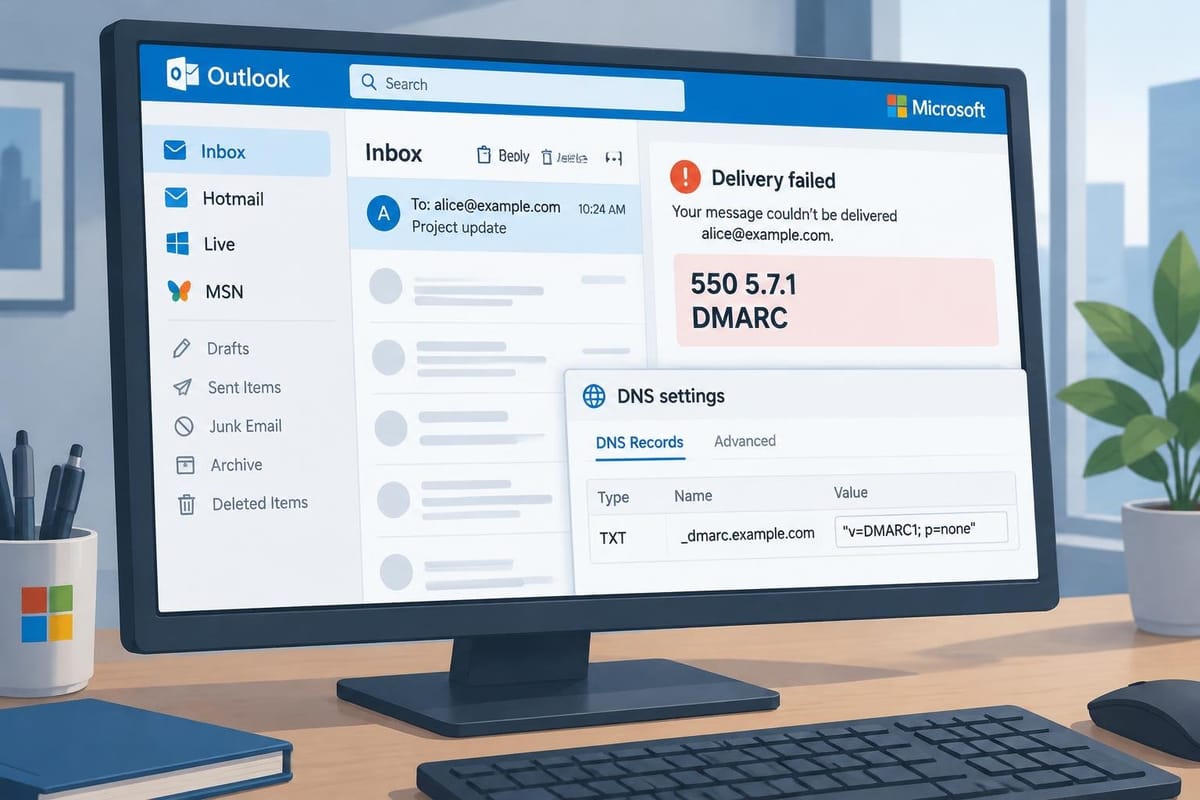
Outlook.com’s current DMARC behavior is creating a mess for senders — and the surprise is that the pain does not seem limited to the people Microsoft explicitly warned in April.
Microsoft’s published guidance was aimed at a specific class of senders: domains that deliver more than 5,000 messages a day to Outlook.com, Hotmail or Live. In that April 2025 announcement, Microsoft said those senders needed SPF, DKIM and DMARC, and it told them to get their records in order before enforcement began in May. Microsoft also said it reserved the right to filter or block non-compliant mail, especially when authentication or hygiene was badly broken. Source: https://techcommunity.microsoft.com/blog/microsoftdefenderforoffice365blog/strengthening-email-ecosystem-outlook%E2%80%99s-new-requirements-for-high%E2%80%90volume-senders/4399730
What changed in November, according to multiple reports, is messier. MailRoute says that since Nov. 5, Outlook.com, Hotmail, Live and MSN have been turning away some mail from domains that do not publish a DMARC record at all — including low-volume senders who should not have been covered by the 5,000-message rule. MailRoute cites a bounce such as:
550 5.7.1 Message rejected: Message lacks SPF/DKIM/DMARC Auth Records (AS9031519)
Source: https://mailroute.net/blog/outlook-rejecting-email-without-dmarc
The Register reported similar complaints from affected users, saying the issue appeared widespread, intermittent and poorly explained, with some senders seeing SPF-related failures and others getting DMARC-related wording. The Register also said a Microsoft forum moderator described the problem as a “service degradation” while Microsoft investigated. Source: https://www.theregister.com/applications/2026/11/09/outlookcom-bounces-legit-emails-as-microsofts-authentication-crackdown-goes-sideways/5308428
That distinction matters. The evidence here does not show Microsoft publishing a new November policy update that formally expands the old 5,000-message rule. It shows rejections happening, a Microsoft moderator acknowledging a service issue, and outside reporters observing that the problem appears to affect more than the original bulk-sender cohort.
The practical scope, based on the reports, is consumer-facing Microsoft inboxes: outlook.com, hotmail.com, live.com and msn.com. That is where the bounced mail shows up. The reporting does not prove a blanket block across every Microsoft mail surface, but it does suggest consumer delivery is stricter than many administrators expected.
The failure mode also appears narrower than the bounce text first suggests. MailRoute says the affected domains it saw often had working SPF and sometimes DKIM, but lacked DMARC. That matters because DMARC is not a separate magic badge; it is the policy layer that ties SPF or DKIM back to the visible From domain. A domain can still look “broken” to Outlook if DMARC is missing or if alignment is wrong.
For administrators, the immediate fix is simple but not optional: publish a DMARC record if you do not have one, then make sure SPF or DKIM aligns with the domain in the visible From address. MailRoute’s starting point is a TXT record like this:
_dmarc.example.com TXT "v=DMARC1; p=none"
That creates a DMARC record without telling receivers to reject mail yet. It is a floor, not the end state. If the sender’s SPF or DKIM does not align with the From domain, DMARC still will not pass. Source: https://mailroute.net/blog/outlook-rejecting-email-without-dmarc
Windows Latest added another wrinkle: some senders say messages are still bouncing even when their records look valid, and resends may succeed. That supports the idea that the problem is not just “you forgot DMARC,” but that Outlook’s handling may be intermittent or uneven across servers. Source: https://www.windowslatest.com/2026/11/08/your-outlook-com-inbox-may-be-silently-missing-emails-since-nov-5-and-even-senders-with-valid-settings-are-getting-blocked/
What should senders do now? First, check whether the domain has a DMARC record at all. If it does not, add one. Then verify that SPF includes the actual sending hosts and that DKIM signs with the same domain users see in the From field. In other words, check alignment, not just whether an individual authentication test says “pass.”
1. Publish DMARC if the domain has none.
2. Verify SPF includes the real sending infrastructure.
3. Confirm DKIM signs with the visible From domain.
4. Check alignment, not just pass/fail in isolation.
5. Watch Outlook.com, Hotmail, Live and MSN for rejects, not only for spam-folder placement.
The unresolved question is whether Microsoft is intentionally widening enforcement beyond the 5,000-message threshold or whether the November behavior is a bug, a premature rollout or some mix of both. The available evidence does not settle that. It does, however, support a more immediate conclusion for anyone who needs to reach people at personal Microsoft addresses: if your domain lacks DMARC, you may already be at risk of rejection.
That is the part admins should not miss. Microsoft’s published rule was aimed at bulk senders. The current reports suggest the fallout may be wider than that, and more erratic than the official guidance led people to expect. If your organization sends invoices, confirmations, hiring emails or customer support replies to Outlook users, this is no longer a background best practice issue. It is a live delivery problem.
The safest assumption right now is not that Microsoft has clarified the rules, but that its consumer mail filters are behaving more aggressively than many senders had budgeted for. If you are still missing DMARC, Outlook consumer inboxes may be telling you to fix it the hard way.




Comments ()