OpenAI to buy Pierre, bringing Code Storage to Codex
OpenAI plans to acquire Pierre and add Code Storage capabilities to Codex while keeping the service available to existing customers after closing.
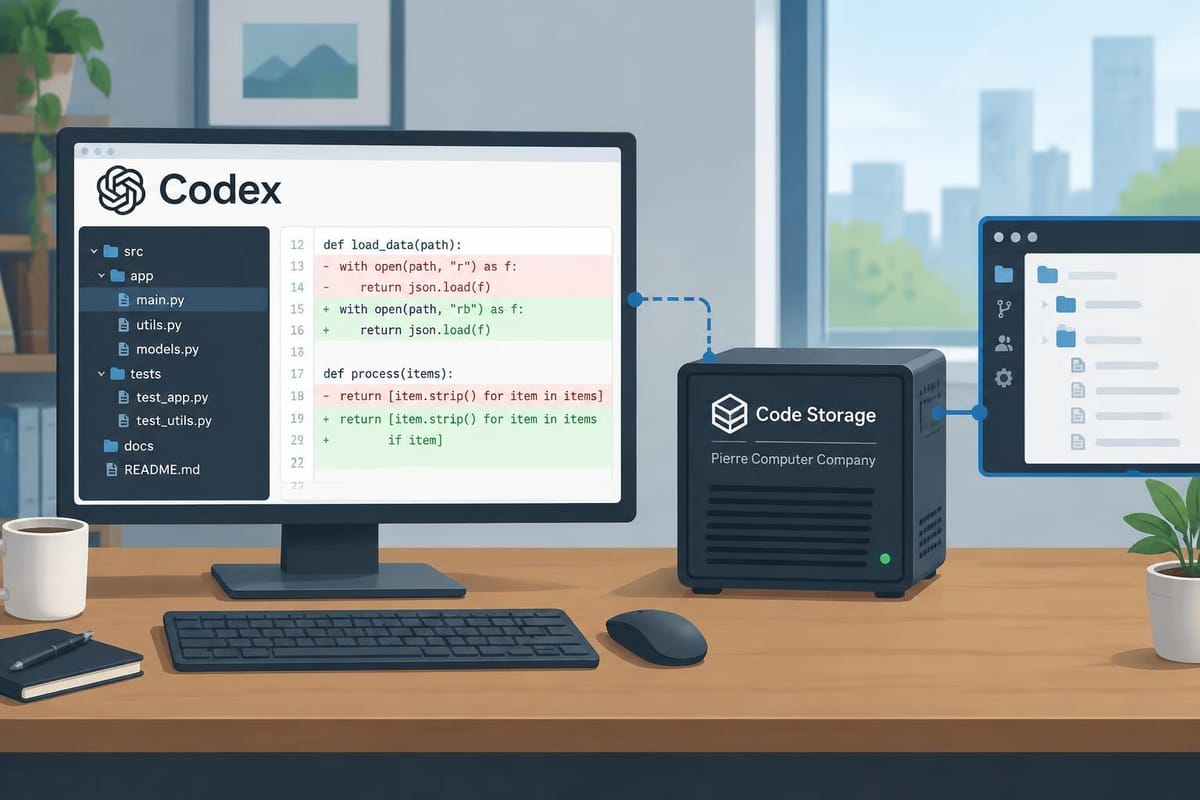
OpenAI announced an agreement on November 4 to acquire Pierre Computer Company, the developer-tools startup behind Code Storage and two open-source libraries already used in Codex. The price was not disclosed, and the deal remains subject to closing conditions and regulatory approvals, Pulse 2.0 reported.
The deal would give OpenAI a way to add code-storage capabilities to its AI coding product, while putting the infrastructure used by Pierre’s existing customers under new ownership. OpenAI says customers can continue using Code Storage after the acquisition closes as it works to bring the service’s features into Codex, and that Pierre’s open-source projects will remain open source. The commitment appears in OpenAI’s announcement.
The companies will remain independent until closing, according to Pulse 2.0. A purchase price, closing date and detailed post-deal plans for customer pricing, support, contracts or migration have not been disclosed.
What Pierre builds
Code Storage is a hosted service that lets applications store code and track changes using Git, the version-control system developers use to manage software projects. Its API is aimed in part at applications and AI agents that generate or modify code, so their builders do not have to create the underlying storage infrastructure themselves.
That is different from an assistant that merely writes code: storage and version control provide a place to keep the result and its history. Pierre’s service can also store related files, such as licenses and interface-design assets, SiliconANGLE reported.
Pierre also builds components that other software can use to display code. Trees powers file-navigation interfaces, including features such as search and drag-and-drop. Diffs displays changed lines between versions of a file, making it easier to inspect an agent’s or developer’s proposed edits. Both are already used in Codex, according to SiliconANGLE.
OpenAI’s promise to keep the projects open source matters to developers using those components outside Codex: the announcement does not confine their use to OpenAI’s product. OpenAI also says it will continue contributing to them.
A larger role in code workflows
Pierre has customers whose applications already depend on its infrastructure. SiliconANGLE reported that Pierre said its service helped AI application builder Lovable cut code-retrieval latency by about 70%; that is a vendor-reported result for one customer, not an independent benchmark of the service.
Before the deal, Code Storage was sold separately. A Data Studios report described its published pricing as combining monthly minimums with usage charges, including a $200 monthly minimum for the Scale plan as listed on November 4. That is a baseline for the standalone product, not an announced Codex price.
The acquisition follows OpenAI’s work on Pando, a Git-compatible backend for its own development environment. As Data Studios reported, OpenAI said Pando reduced median push latency by nearly 80% in its internal production setting as coding agents increased repository activity. That result describes OpenAI’s own workload, not a performance claim for Pierre’s service.
Together, the projects show why storage is becoming important to OpenAI’s coding ambitions: generating edits is only one part of the job. Those edits must also be stored, organized and reviewed. OpenAI has announced the intended Code Storage integration, not a finished replacement for existing Git hosting services.


Comments ()