OpenAI launches free customer-facing Business Agents in US beta
OpenAI’s Business Agents let eligible U.S. online businesses answer shoppers in ChatGPT. Here are the terms, controls and limits.
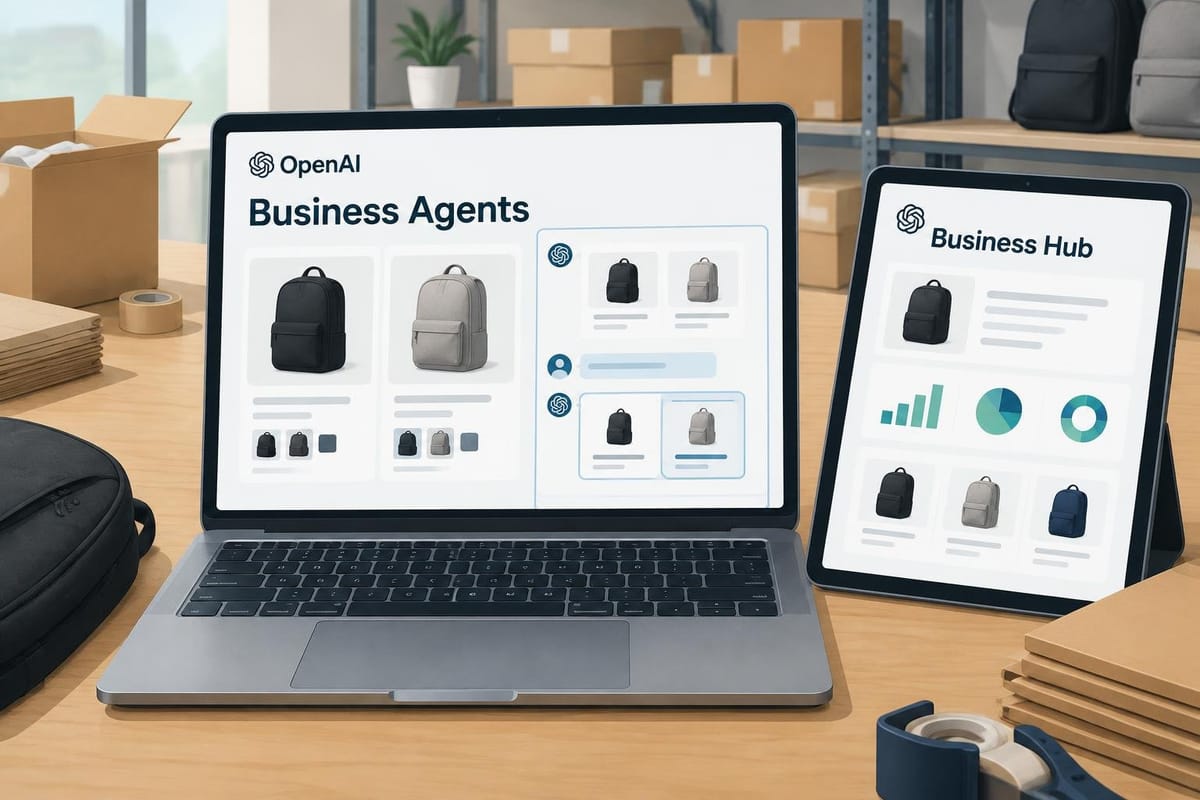
OpenAI launched Business Agents in beta on November 10, giving eligible U.S. e-commerce and online service businesses a free way to answer customers’ questions inside ChatGPT. The agents are part of a new Business Hub where companies can claim and manage their profiles, The Verge reported.
The launch gives businesses a place to speak for themselves after ChatGPT introduces them, without buying an ad. But OpenAI retains control over the agent and the customer conversation: companies receive aggregate insights rather than transcripts, and cannot bring their own agent to the platform, Digiday reported.
This is a customer-facing product, not simply a new automation feature for employees on the ChatGPT Business subscription. A shopper can open a business’s profile from a ChatGPT response and start a separately labeled conversation with its agent. The agent can answer questions about the company’s offerings, compare products and direct the customer toward a next step, according to OpenAI’s descriptions reported by The Verge and FoneArena.
Who can publish
Business Hub is rolling out in beta to eligible businesses in regions where ChatGPT is available, but agent publishing starts more narrowly: eligible U.S. e-commerce and online service businesses. Initially, a business needs a website to claim a profile, and the person managing it must own the business or be authorized to represent it. Eligibility also depends on verification and integrity checks, FoneArena reported.
A company first claims and verifies its profile, then can build, test and publish an agent using its own business information and guidelines. Shopify merchants can connect their stores through Shopify’s admin or Business Hub; their catalog supplies product details, prices and availability. Businesses without Shopify can claim directly through Business Hub. OpenAI’s Enterprise customers and advertisers can also work with their OpenAI representatives to claim their businesses, according to FoneArena.
The Business Hub and organic agents are free for now, OpenAI vice president of monetization Benji Shomair told Digiday. He did not rule out charging in the future. Businesses can also pay to use an agent as a sponsored destination; Shomair described that as the paid route to the same underlying agent.
The available reporting does not specify a required ChatGPT subscription tier, granular administrator roles or external-tool permissions for Business Agents, or a timetable for expansion. OpenAI also did not detail its verification methods, which vary by business, Shomair told The Verge.
What the business controls—and sees
Companies supply product and policy information and configure guidelines for how their agent responds. That makes the agent a branded representative, rather than an independent comparison made by ChatGPT: OpenAI says the agent conversation is labeled and kept separate from the user’s original chat. Digiday reported that the shopper is directed to the business’s own site when ready to pay.
Business Hub also offers aggregate measures including mentions, website clicks and topics associated with discovery. An OpenAI spokesperson told Digiday that businesses cannot see individual prompts or agent chats, and that low-volume counts may be withheld for privacy. A website click measures a click on a supported ChatGPT link, not a completed visit or purchase.
Claiming a profile does not guarantee that ChatGPT will recommend a business more often or generate sales, according to FoneArena. Shomair told Digiday that more complete information could nevertheless help ChatGPT surface a business in more relevant conversations. The distinction matters: businesses can improve what they supply and pay for labeled sponsored placement, but neither amounts to control over ChatGPT’s ordinary recommendations.



Comments ()