Microsoft targets faster recovery after Microsoft 365 outage
Microsoft’s reported Code Red sets an internal recovery target after a major outage; learn what it means for continuity plans.
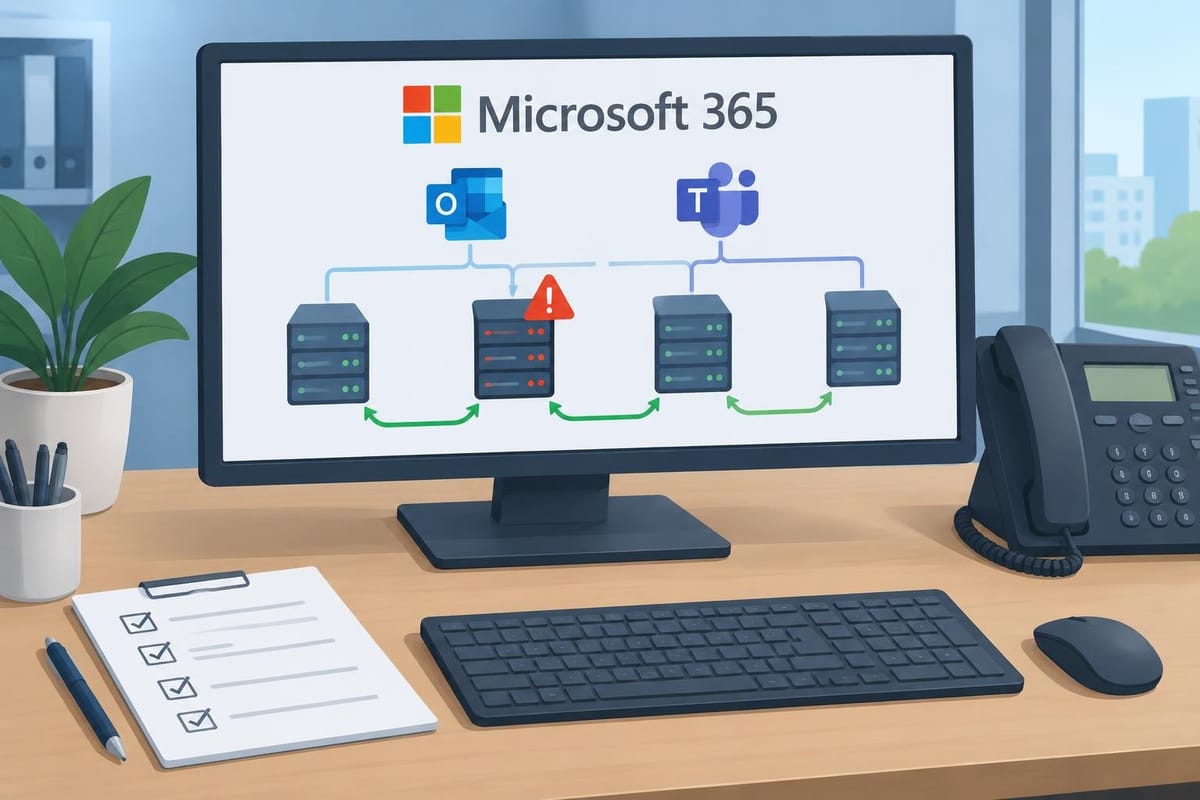
Reuters reported on November 24 that Microsoft has declared a Code Red for Microsoft 365 core service health, with an internal target of resolving future worldwide incidents within one hour. The move follows a nearly 24-hour outage on November 12–13.
For Microsoft 365 administrators, that target is a reported internal goal, not an established customer guarantee. Microsoft told Reuters that preventing disruptions is a priority, but the report establishes no new customer-facing recovery commitment or service-level agreement. Continuity plans should therefore still account for an extended loss of hosted email and collaboration services.
The incident ran from 16:20 UTC on November 12 to 16:10 UTC on November 13, according to Cyber Security News’ account of Microsoft’s preliminary incident report. Exchange Online was the hardest hit; Outlook, Teams, Copilot and other Microsoft 365 products were also disrupted. The incident duration does not mean every customer or service was unavailable for that entire period.
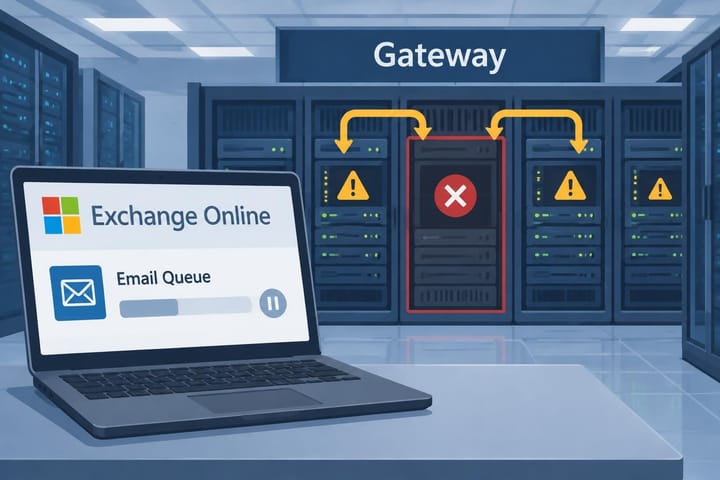
Microsoft attributed the failure to a Windows scalability defect introduced in July on Microsoft 365 networking gateway servers. A traffic shift and reduced gateway capacity helped expose it; automated recovery then shifted connections to other servers, spreading the load and the failure. Engineers restored service by changing connection handling and gradually returning server groups to traffic. Our earlier coverage explains the gateway defect in more detail.
Reuters said Microsoft’s internal plans include work on load shedding, geographic traffic partitioning and faster recovery, as well as AI agents to help engineers diagnose system health. During the outage, responders exchanged more than 11,000 messages across 11 Teams chats while diagnostic information was scattered across internal systems, according to a memo Reuters reviewed.
Administrators can use incident IDs EX1550543 and MO1550821 to review their tenant’s service-health records, then check whether their organization has a workable out-of-band way to coordinate and reach staff when both email and Teams are impaired.

Comments ()