eMudhra’s Certificate Fallout Is Forcing a Trust Reset, Not a Full Stack Breakdown
Weak keys in eight eMudhra intermediates triggered browser distrust, CERT-In scrutiny and a certificate-business exit. The reporting does not yet show broader damage across India’s identity stack.

eMudhra’s certificate incident is now a trust story, not just a security one.
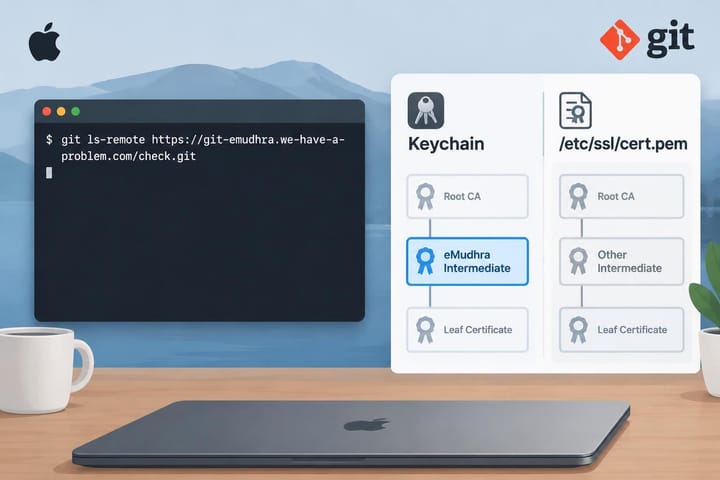
After weak keys were found in eight intermediate certificate authorities, browser makers and security vendors moved to distrust the affected chains, and eMudhra said it would withdraw from the global certificate business. The company said the problem was limited to select global TLS intermediates and one root CA, while its digital signature and e-sign businesses run on separate infrastructure. eMudhra statement, The Record
The immediate consequence is contained but real: browser and software trust stores are being updated, and customers that relied on the affected chains are being pushed to migrate. The Record reported that eMudhra said it was voluntarily exiting the certificate business after the weak keys triggered browser blocks and backlash, while Cloudflare said it was deploying mitigations and client updates after discovering the compromised intermediates. Cloudflare, The Record
India’s regulators are now in the loop. The Hindu BusinessLine reported that CERT-In opened a probe, and eMudhra has faced public scrutiny over how the flaw persisted through its key-generation process. BusinessLine also reported that the issue had erased nearly ₹1,300 crore in market value by Oct. 22, underscoring how fast a cryptographic mistake can turn into a governance problem. The Hindu BusinessLine, The Hindu BusinessLine
What the available reporting does not yet show is a proven broader slowdown across India’s onboarding or identity market. The evidence so far is narrower: browser distrust, vendor mitigations, a regulator’s inquiry, and a vendor walking away from one business line. That is still enough to raise the cost of trust for any customer who depends on certificate suppliers to just work.
For now, the fallout looks less like a systemic collapse than a sharp reminder that digital trust infrastructure lives or dies on continuous verification — not audit language, not brand reputation, and not assumptions that weak keys will stay hidden.

Comments ()