AWS releases free local emulator, says agents wrote its code
AWS Emulator lets developers test cloud APIs locally; learn how its agent-built code, licensing and fidelity limits work.
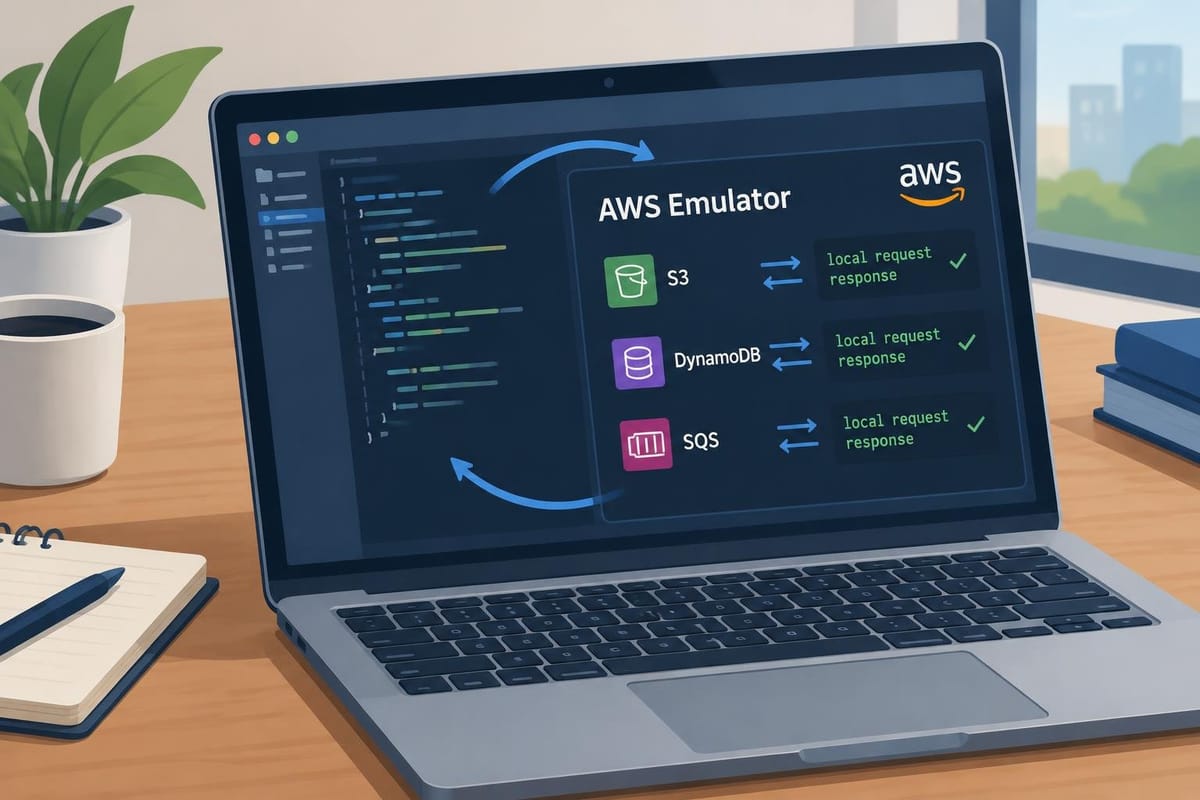
Amazon Web Services released AWS Emulator on November 11, a free local tool built from API models covering more than 200 AWS services. AWS says autonomous AI agents wrote its code and that its engineers neither wrote nor reviewed it, GeekWire reported.
The emulator gives developers and coding agents a way to repeatedly test cloud application behavior on their own machines without provisioning real AWS resources or paying for those cloud calls. It is a simulation, not a complete local copy of AWS: coverage and fidelity vary by service and operation.
Examples include creating an Amazon S3 bucket, writing to and reading from a DynamoDB table, and working with Amazon SQS queues. The Rust-based emulator exposes a local HTTPS endpoint for the AWS CLI and SDKs; developers point their tools at it using environment variables rather than changing application code, according to the AWS launch post.
No AWS account is needed. Linux users can install RPM or Debian packages; macOS and Windows users build and run a Docker image. The repository offers the code under the CC0 public-domain dedication, except for vendor code licensed under Apache 2.0. Usage and error telemetry is on by default; this command starts the emulator with it disabled:
aws-emulator --telemetry off
AWS senior principal engineer Matt Goldberg says the absence of human code review does not mean an absence of human direction. His team supplied the specifications and guardrails: separate agent teams write tests checked against real AWS, find discrepancies and fix them. Automated checks cover compilation, security and fidelity before changes are merged. The account is AWS’s description of its process, not independent verification of every contribution.
AWS publishes per-service fidelity results based on workflows compared with real AWS; an unimplemented operation returns HTTP 501. The scores measure tested behavior, not complete parity. The user guide says the emulator does not evaluate IAM and resource policies as AWS does, so it should not be used to test application security. It also keeps resources in memory and deletes them on shutdown, does not separate resources across accounts or Regions, and has not been tested for load or long-running use.


Comments ()